
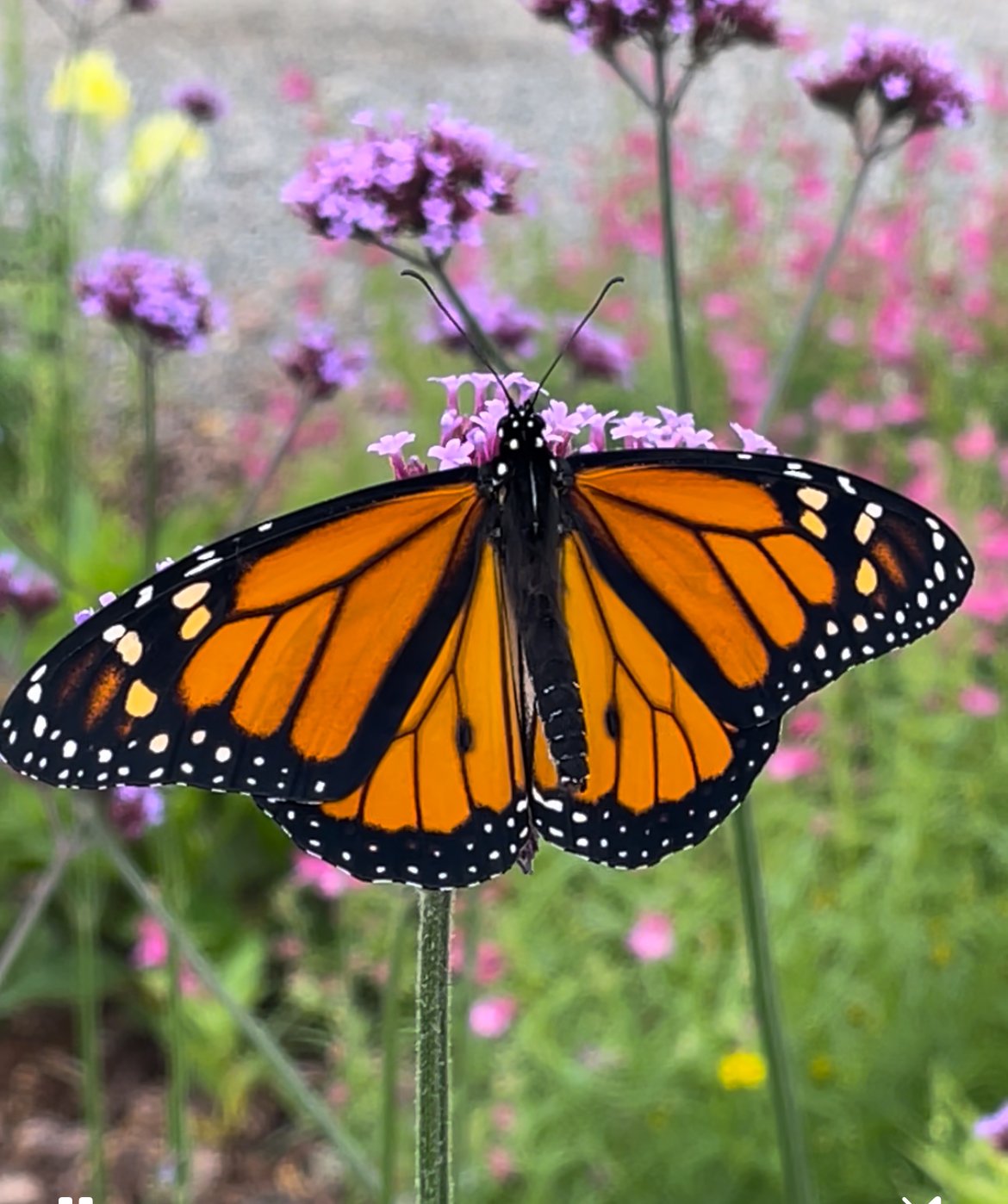
Monarch
Danaus plexippus
Photo: Ruth Gonzalez
Dr. John Wilson Community Garden Parking Lot, South Veterans Park, 99 White Pine Dr., Black Mountain, NC 28711
(Follow the directional signs once you get there!)
Sponsored By:
Beatrice McQueen, in loving memory of her sister, Kate Louise McQueen
Black Mountain Greenways and Trail Committee
Sharon Mammoser, NatureForMySoul.com


Thanks to Dr. Matt Bertone of NCSU for providing the photo for the giant wings.
Meet the Butterfly
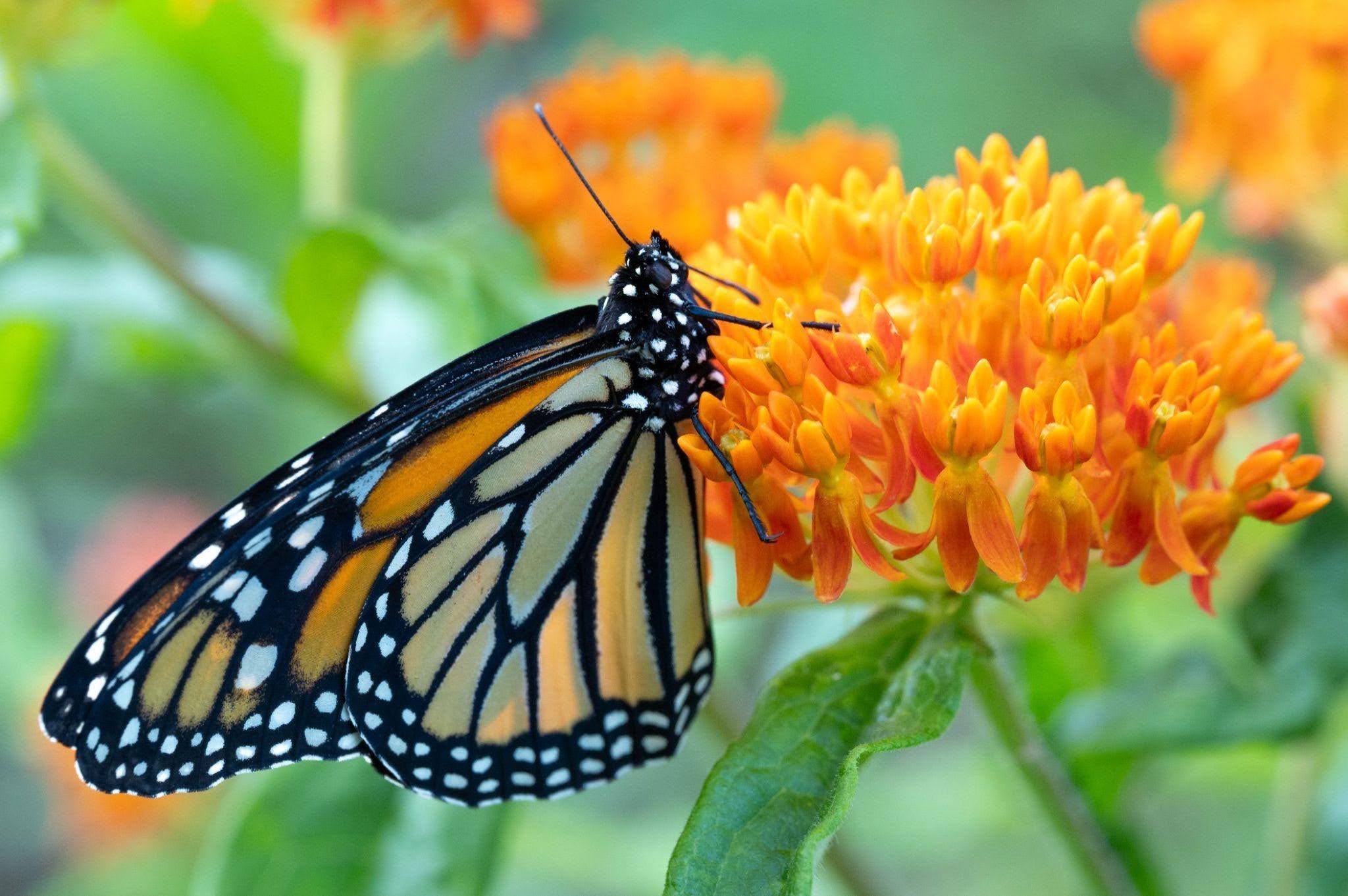
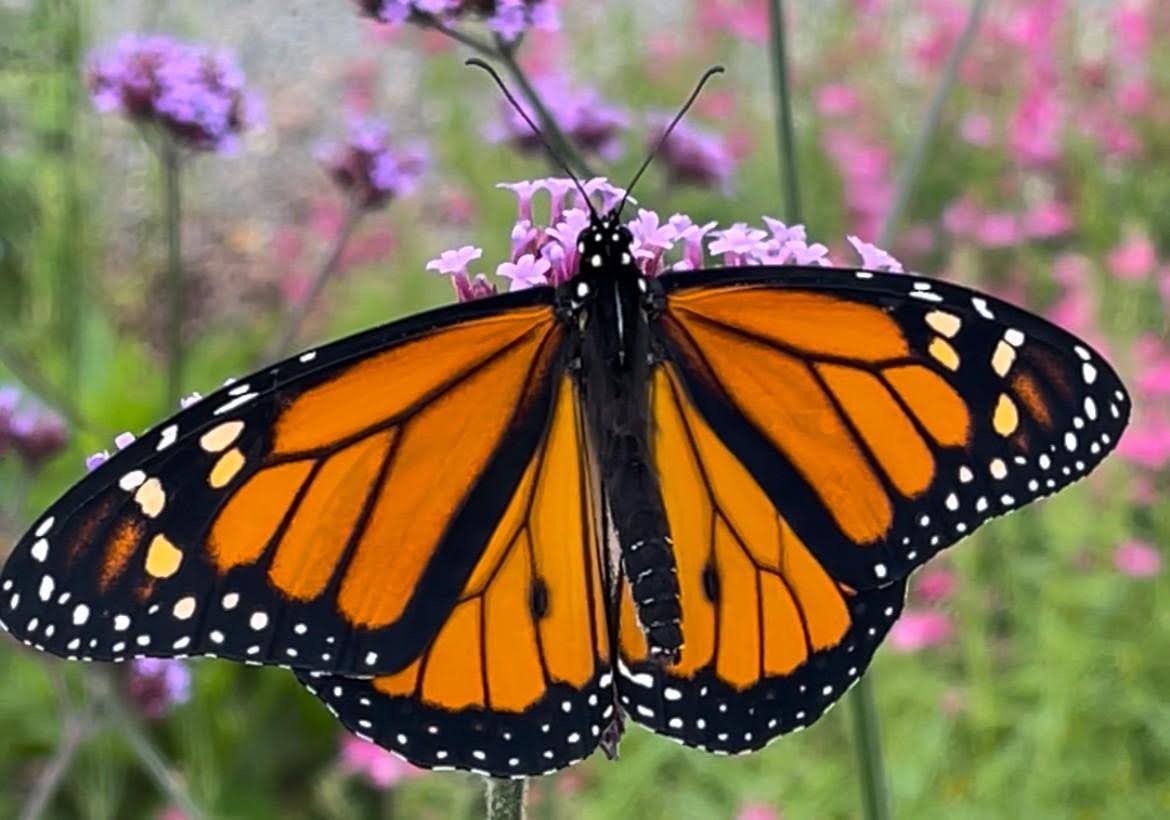
The Monarch’s distinctive orange and black pattern make it easy to spot when it flutters through Western North Carolina on its annual migration route.
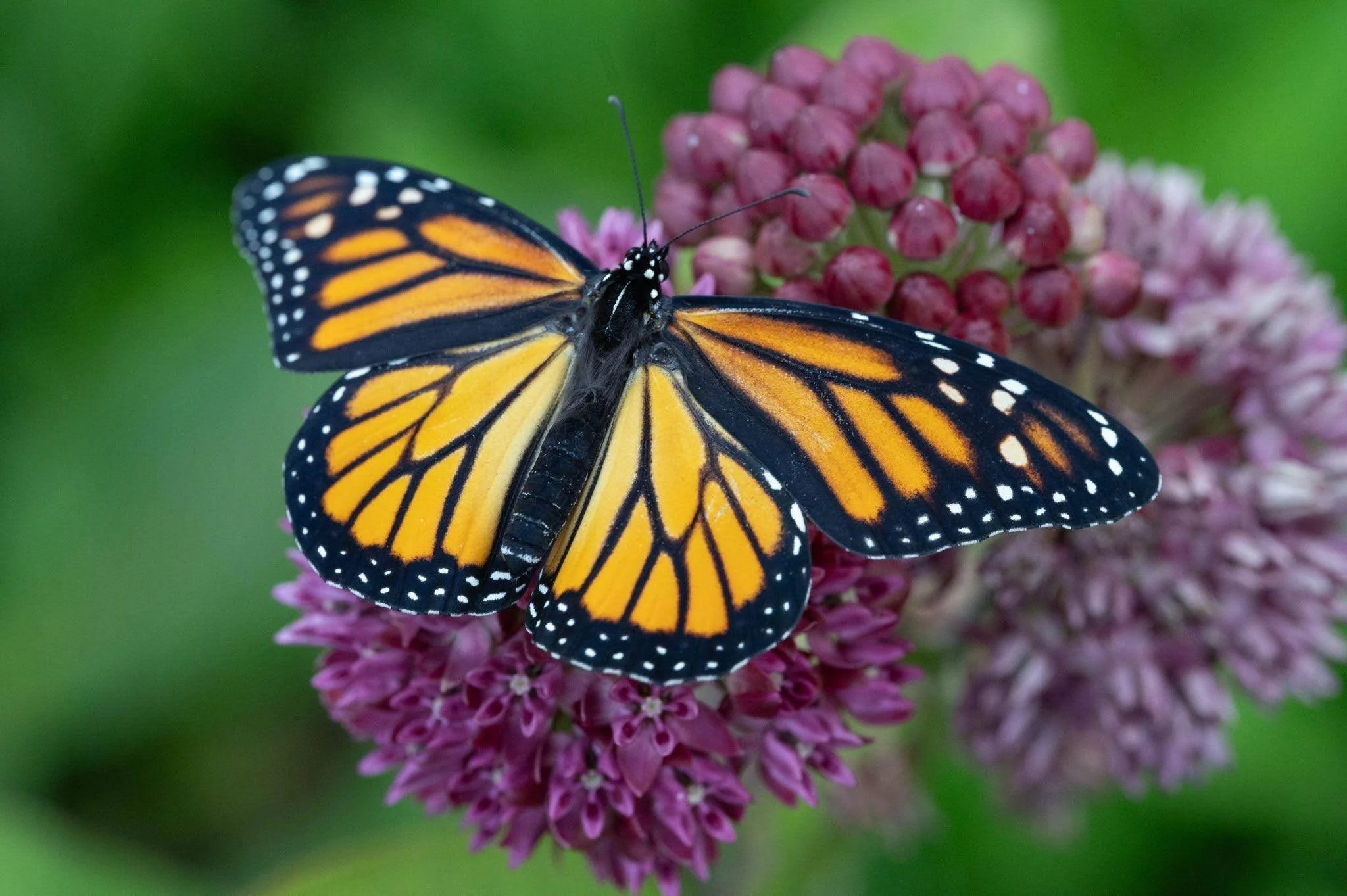
Females (shown here) have thicker veins than males. Males (shown above) have black pheromone sacs in their hindwings.
Some say the Monarch was named by the English for Prince William of Orange who became King William III. The Mazahua of Central Mexico call Monarchs las hijas del sol, or “daughters of the Sun.” In Spanish they are called las Mariposas monarcas.
Photo: Sharon Mammoser, Nature for My Soul
How on Earth Do They Fly From Canada to Central Mexico?
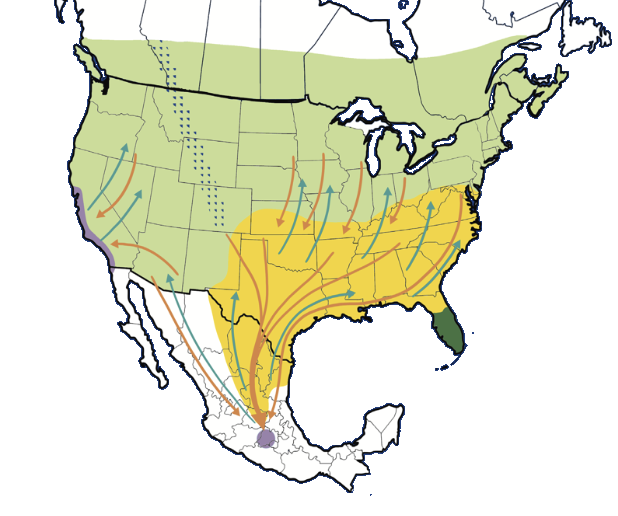
Averaging just 3.5” from wingtip to wingtip, how do these insects navigate as much as 3000 miles to overwinter in a place they’ve never been--Mexico’s lush mountaintop oyamel fir and pine-oak forests? And they do it alone! It’s no wonder many Mexicans consider them the spirits of their deceased loved ones when they arrive around Dia de Muertos (Day of the Dead).
Monarch butterflies usually live 2-6 weeks, but if they emerge at summer’s end, they will live as much as 9 months. They are the “super generation.”
Most Monarchs east of the Rockies migrate south to Mexico’s 10,000-11,000 feet high mountains for the winter. Then, they migrate north to the US and Canada in the spring and summer. Those west of the Rockies overwinter at sites along the coast of California, then mostly migrate north for the summer.
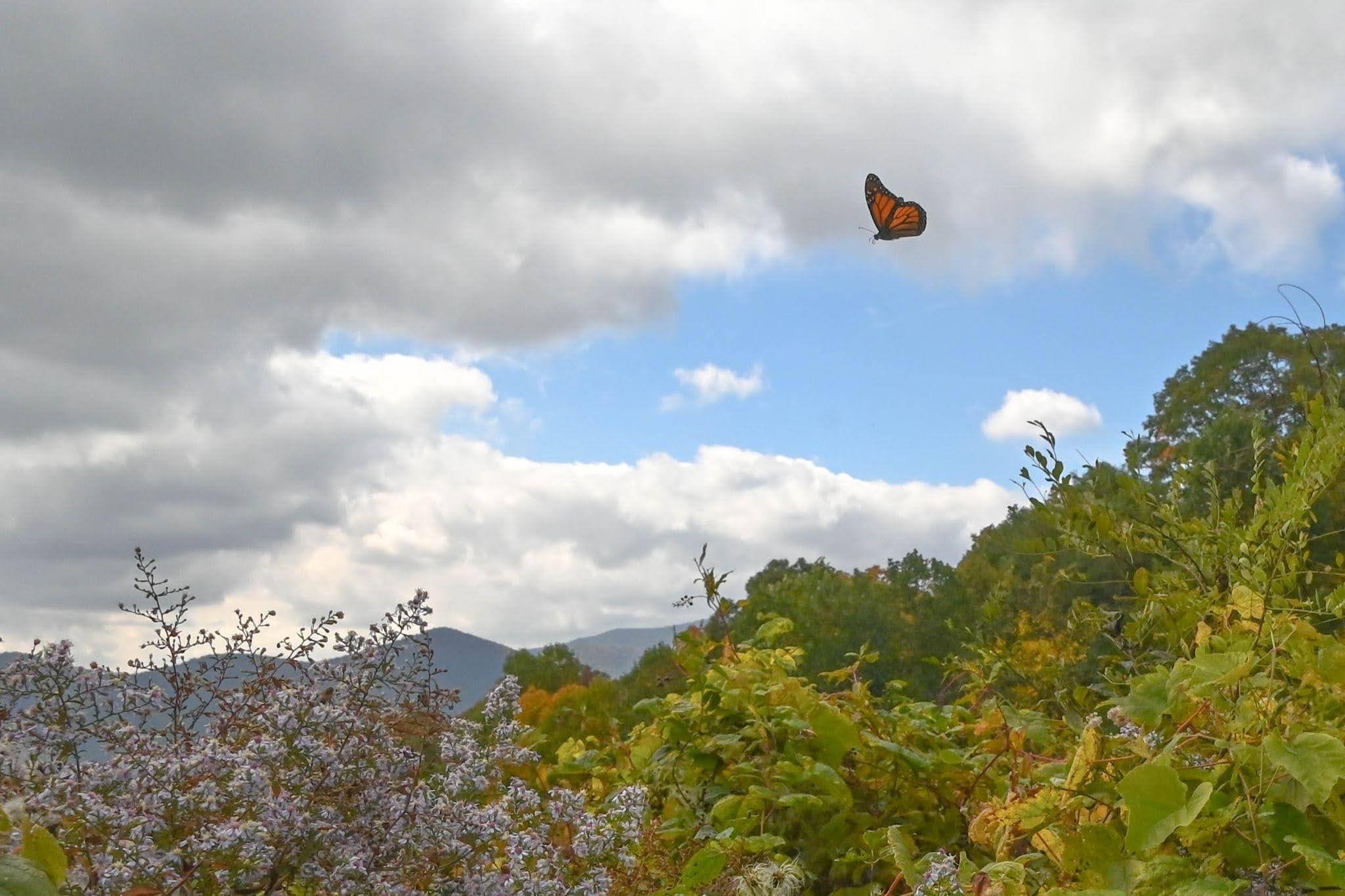
In Western North Carolina, we typically see our first caterpillars and adults in April and our last adults in October.
You can record your sightings at Journey North and track the Monarchs’ progress as they follow the Milkweed north as it emerges from its winter sleep.
Photos: Sharon Mammoser, Nature for My Soul
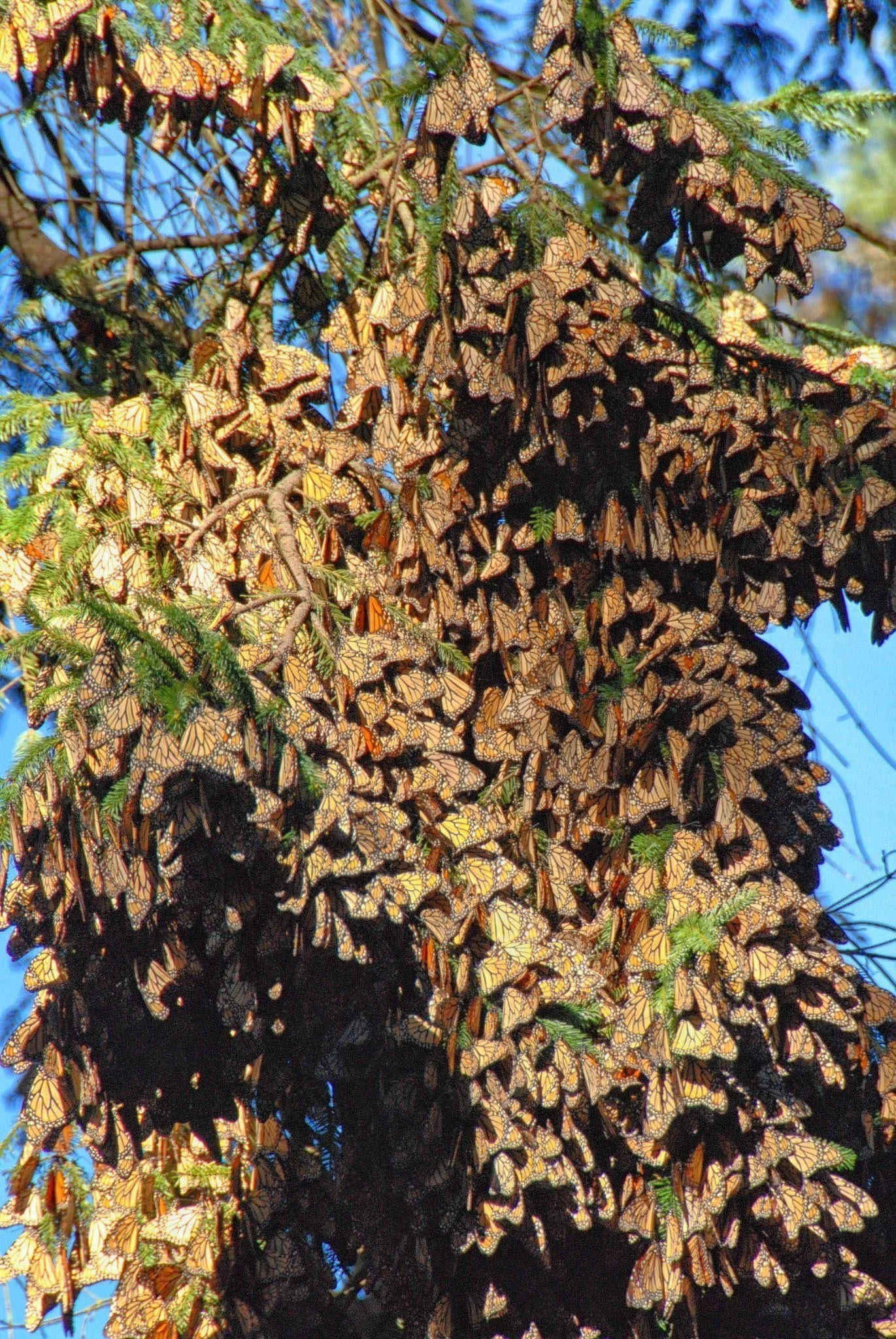
Although Monarchs complete the journey solo, once they reach their destination, they group together in “colonies” of thousands of butterflies that look like vast swaths of dead leaves, heavy enough to weigh down tree branches (and sometimes even break them).
When a shaft of sunlight warms their wings and they take flight by the thousands, it’s the only place in the world you can hear butterflies flying.
Photo: Sharon Mammoser, Nature for My Soul

Around Valentine’s Day, love is in the air! They mate just before starting their return flight to the United States.
Before the “super generation” dies, it fulfills its destiny. Females lay their eggs on sprouting Milkweed starting in Texas.
Photo: Sharon Mammoser, Nature for My Soul

Monarch Life Cycle

Egg: 3-5 days
Butterfly: 2-6 weeks (Super-generation: 9 months)
Caterpillar: 10-14 days
Chrysalis: 8-15 days
Illustration: Lauren Gingery
Caterpillar Host Plants
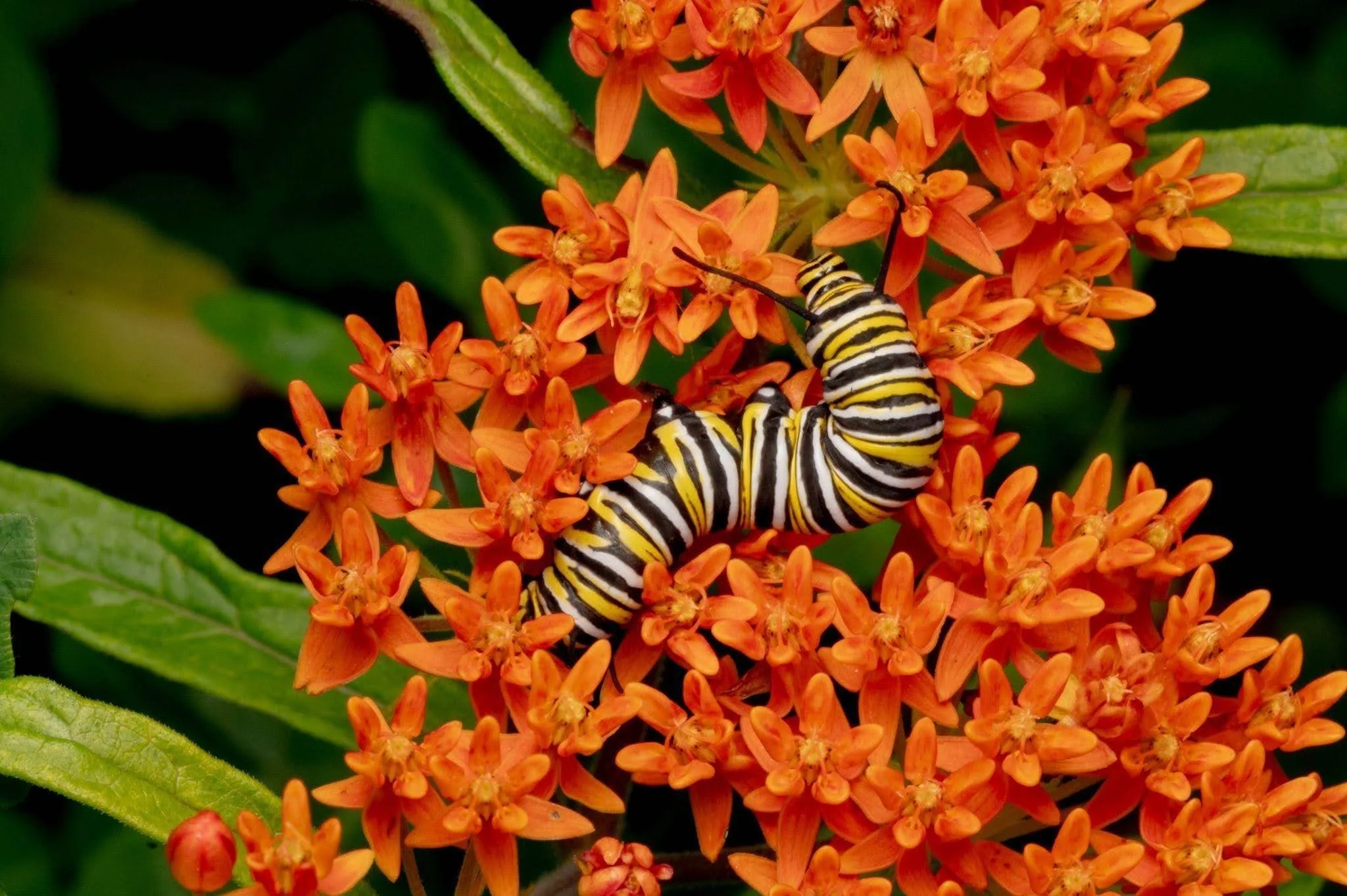
Milkweed leaves are just about the only thing Monarch caterpillars eat!
These very important host plants used to grow plentifully between crops and in meadow areas, providing a steady supply of food for caterpillars during the “relay race” north.
Queen butterflies also favor Milkweed as a host plant, but they are mostly found in more tropical areas.
Some of the most common Milkweeds that are native to Western North Carolina are featured below.
Photo: Sharon Mammoser, Nature for My Soul
-
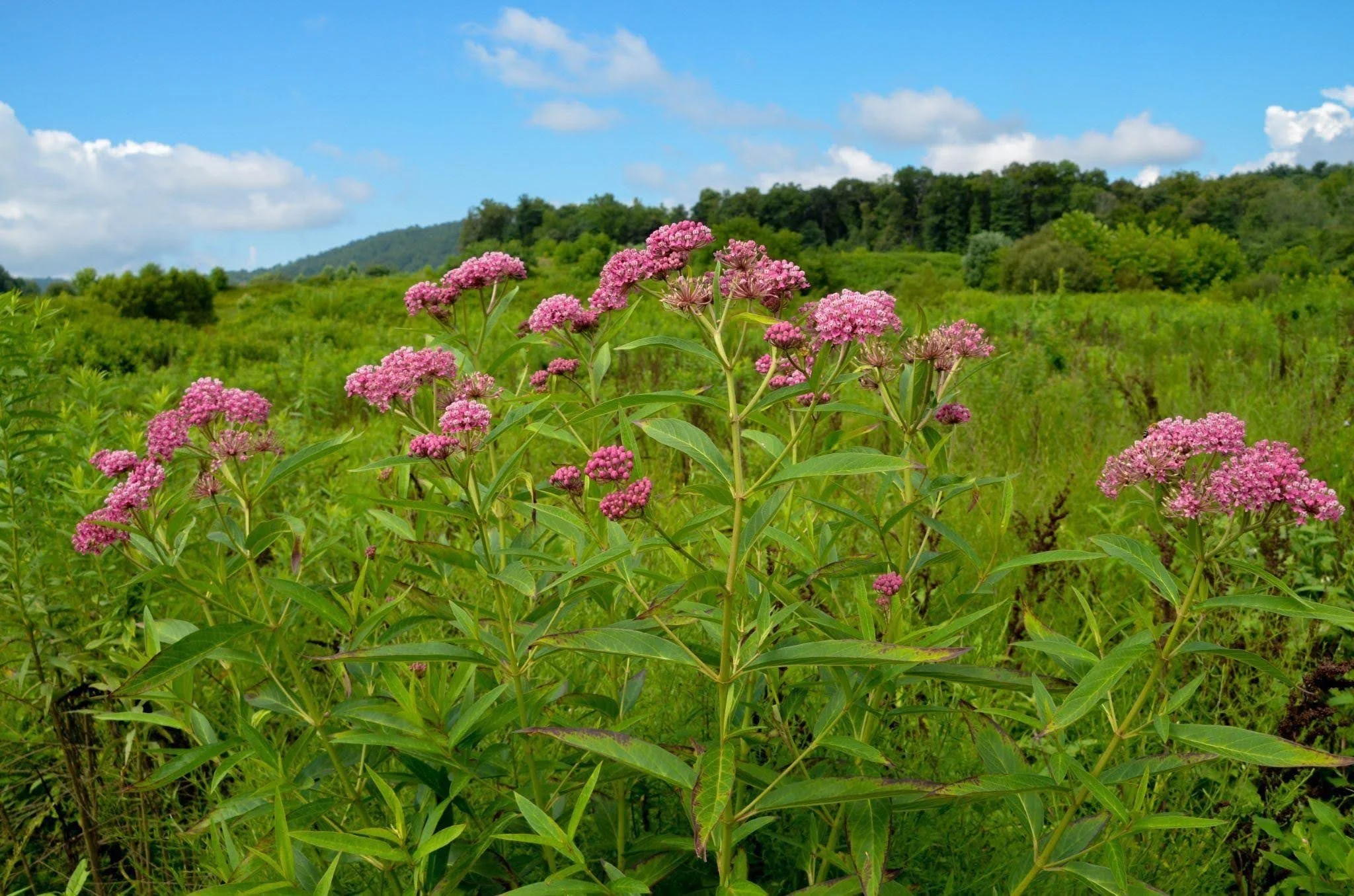
Swamp Milkweed
Asclepias incarnata
This beautiful flowering perennial earned its name because it doesn’t mind having occasional “wet feet,.” Unlike Common Milkweed, it does not spread.
Photo:
-
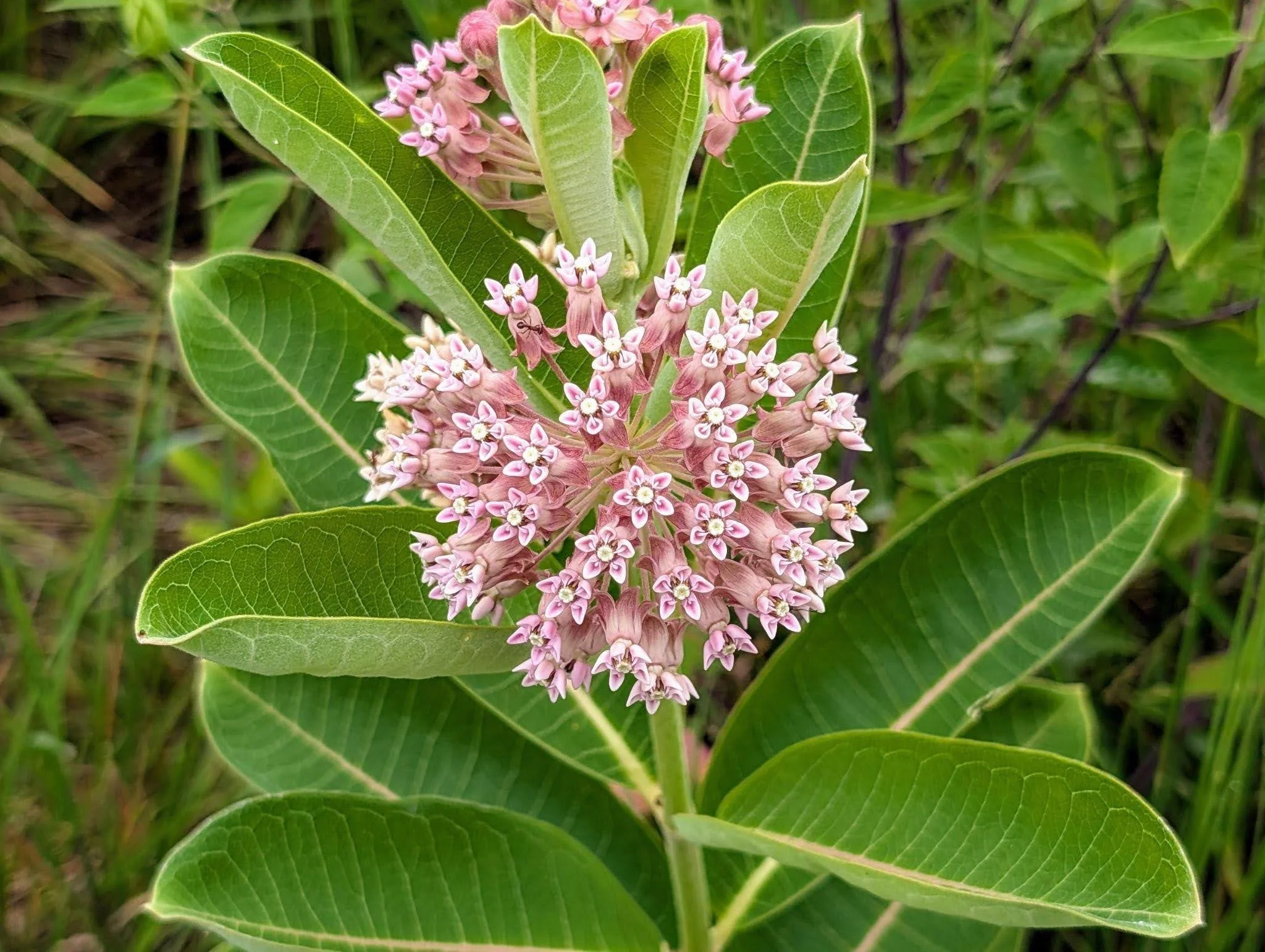
Common Milkweed
Asclepias syriaca
Given plenty of sunlight, Common Milkweed will reach chest-high and readily spread throughout the landscape. Ideal for open spaces and meadows.
Photo: Shutterstock
-
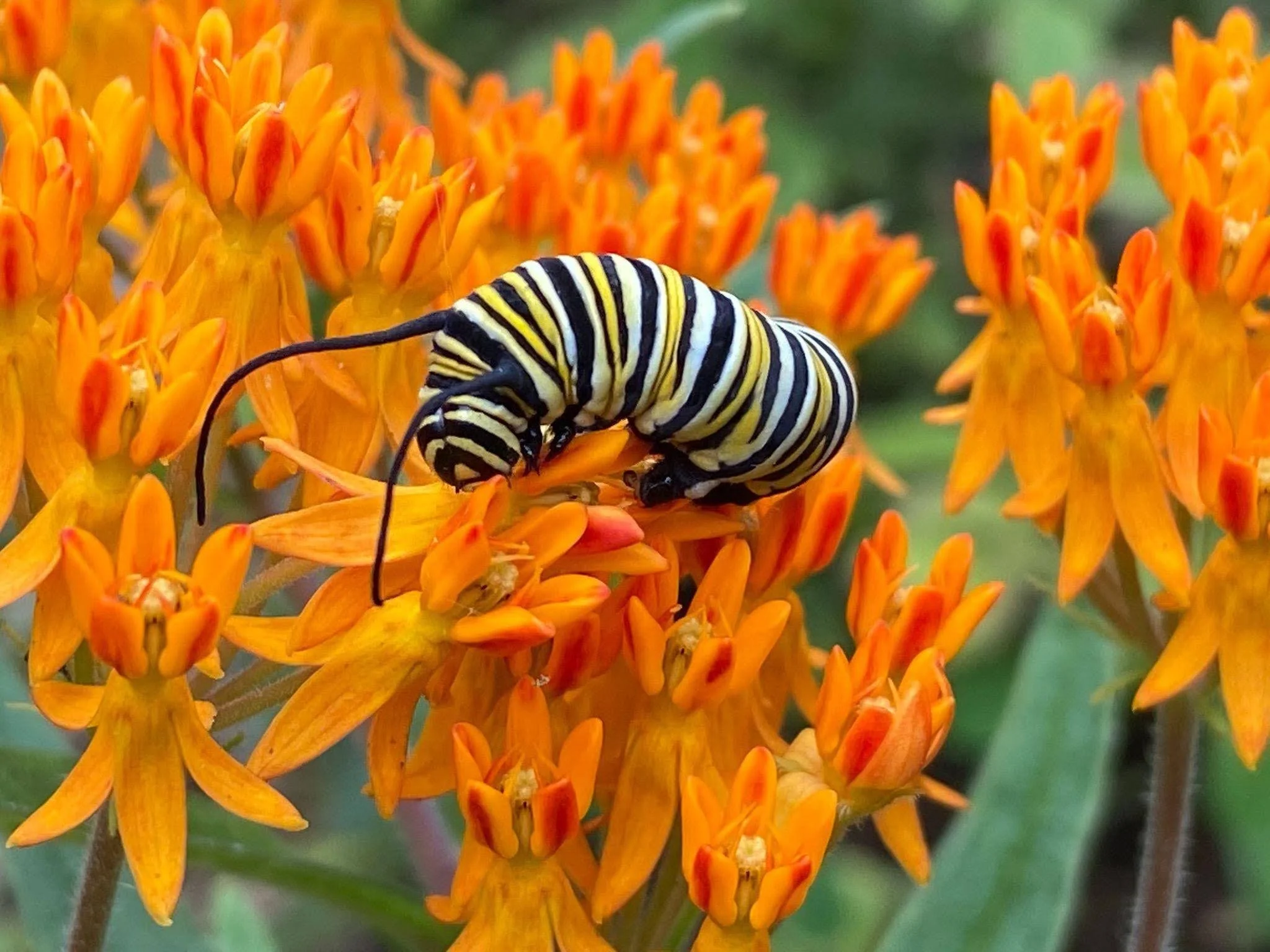
Butterfly Milkweed
Asclepias tuberosa
This compact Milkweed has a taproot and will not spread like Common Milkweed. Gorgeous in formal or informal gardens, plant it in sun to part shade.
Photo: Kim Bailey, Milkweed Meadows Farm
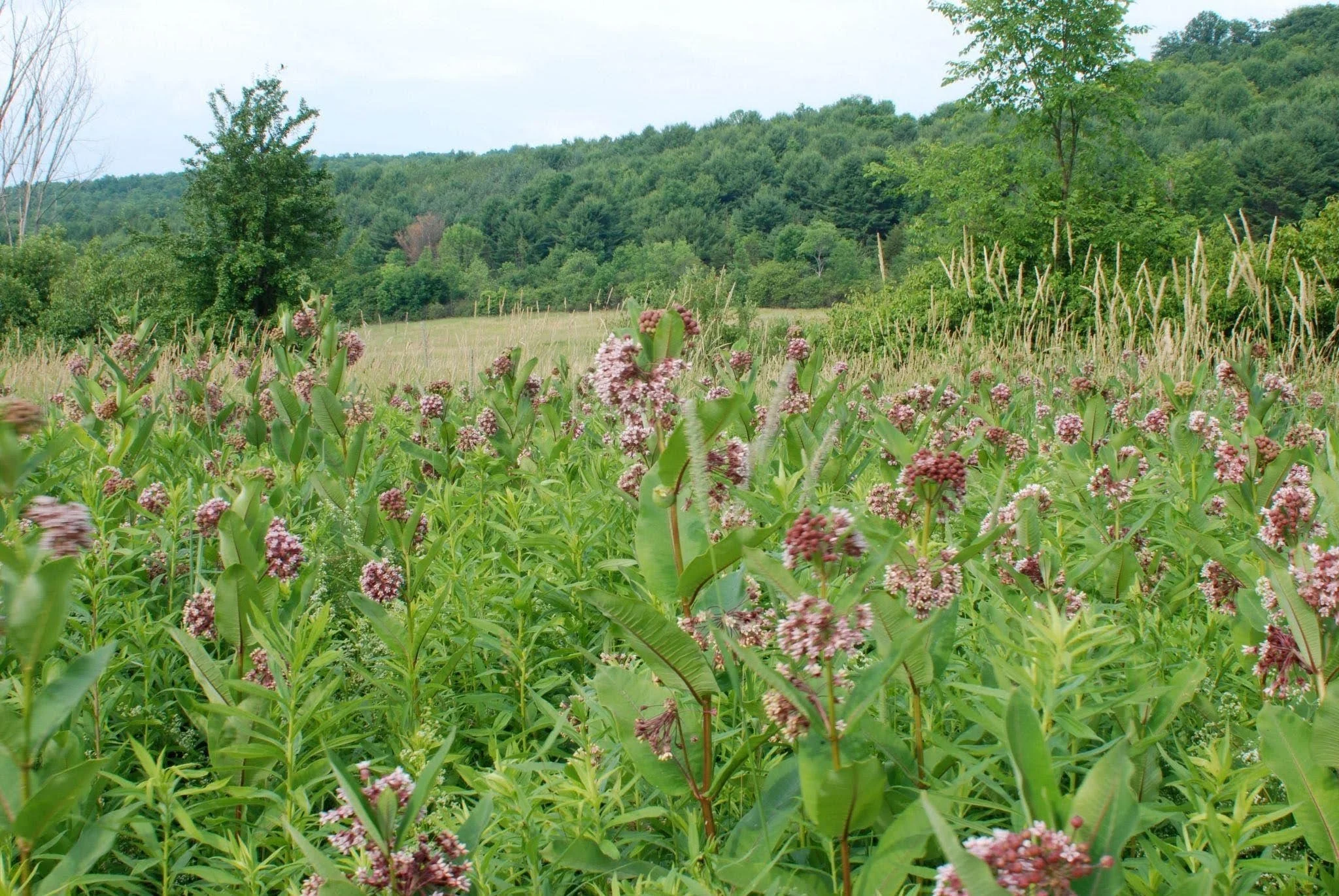
Where did all the Milkweed go?
Imagine. At the turn of the 20th century, there were reports of Monarchs blocking out the sun as they migrated through Western North Carolina!
While there are more than 70 species of Milkweed that are native to the continental United States, today, Milkweed is much rarer to see growing wild. Here’s why.
Monarch caterpillars evolved physically and behaviorally to safely consume Milkweed’s toxic cardiac glycosides. Fearing their livestock would also consume Milkweed’s toxins, over the last century, many farmers eradicated Milkweed from their fields.
After WWII, new herbicides were developed and crops were genetically modified to resist some herbicides. However those herbicides killed the Milkweed that formerly grew among the crops.
Lastly, urbanization and habitat loss further reduced the Milkweed population as chemically treated lawns and exotic plants came to dominate American landscapes.
Planting native varieties of Milkweed is essential to supporting Monarchs. For example, even though tropical Milkweed is often available at many nurseries, it’s best to choose a locally native species. Tropical Milkweed tends to stay fresh and tender later in the season, which may fool Monarchs into staying put rather than migrating south for the winter. It may also pass along a parasite that prevents Monarch caterpillars from developing into adults.
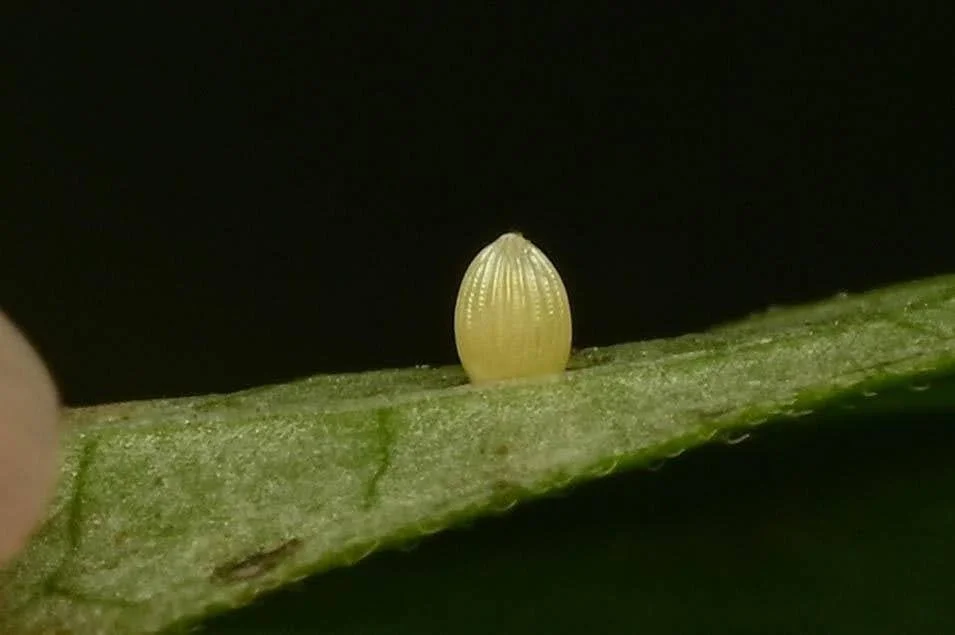
Monarch mothers prefer to lay only one egg per Milkweed plant, usually underneath a leaf.
This is so their hungry caterpillars will have lots to eat with minimal competition. Like most caterpillars, their eggshell will be their first meal. When Milkweed is in short supply, mothers will lay multiple eggs on a single plant which will likely doom many of the caterpillars to starvation.
The more native Milkweed you plant, the more options Monarch mamas will have. Milkweed flowers also are loaded with nectar for butterflies, bees, hummingbirds, and other pollinators.
Photos: Sharon Mammoser, Nature for My Soul
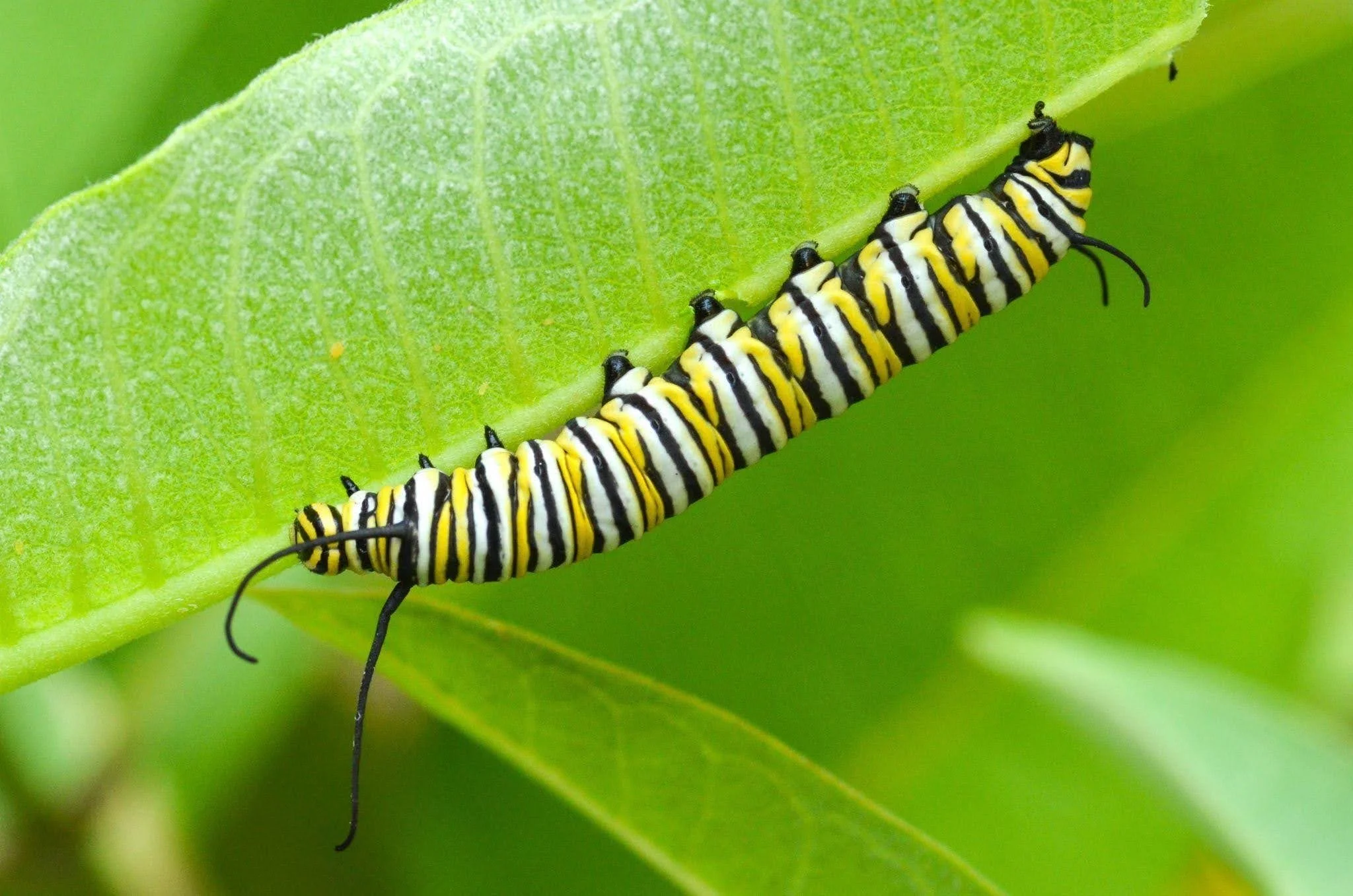
Alert, alert!
These bright colors warn predators that eating the caterpillars will probably make them vomit! Monarchs evolved to safely ingest cardiac glycosides contained in the leaves of the Milkweed. However, these compounds are toxic to birds and other vertebrate predators. This defense mechanism is very important, only about 1% of Monarch eggs will ever reach reproductive age.
Monarch caterpillars pass through five instars, or phases of larval life, shedding their skin after each one. By the fifth instar, they will be over 2,000 times the size they were when they emerged from the egg about 11-18 days prior. If a human baby grew at the same rate as a Monarch caterpillar, the newborn would balloon to the size of a school bus in 2 weeks.
Chrysalis: Metamorphosis fit for a king (or queen)
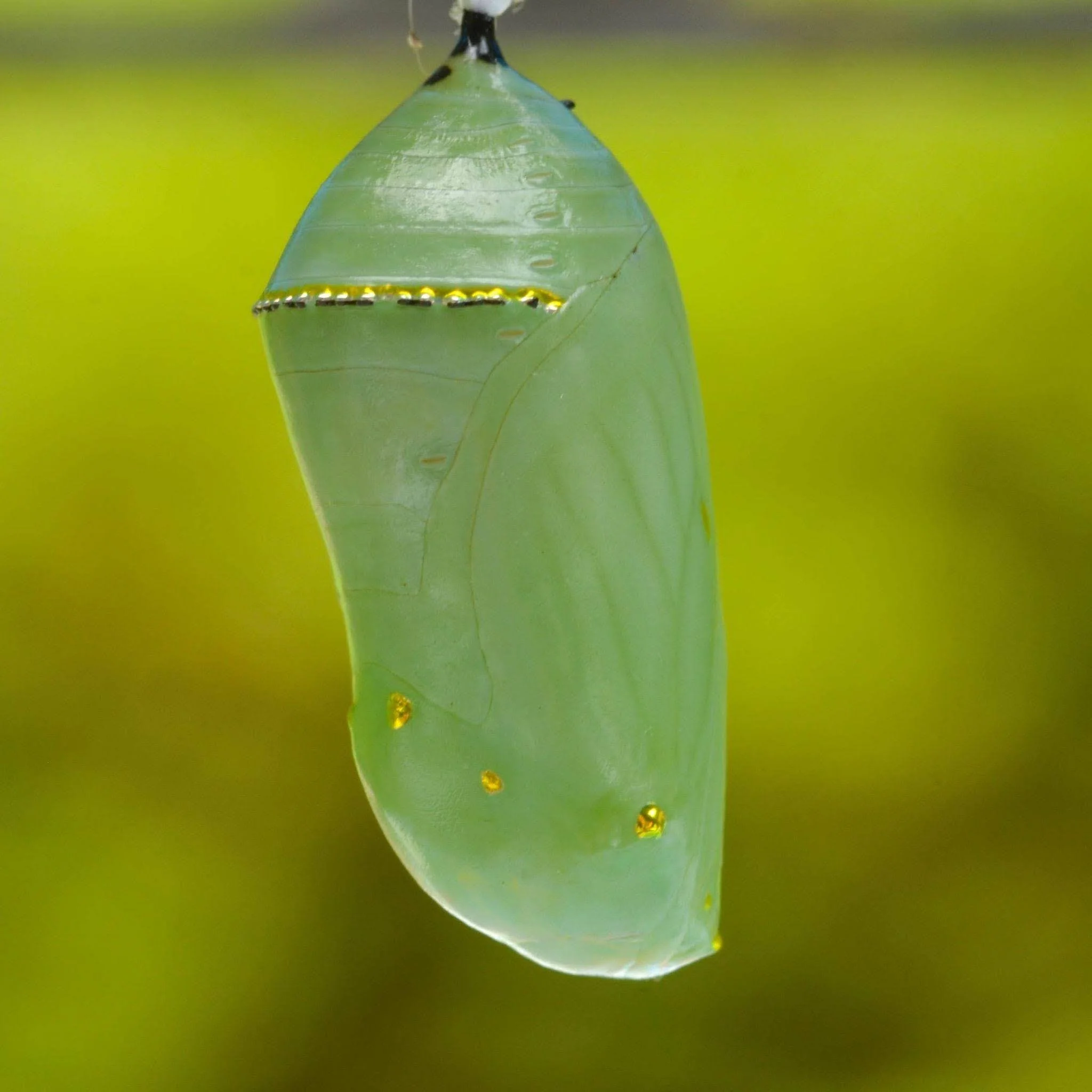
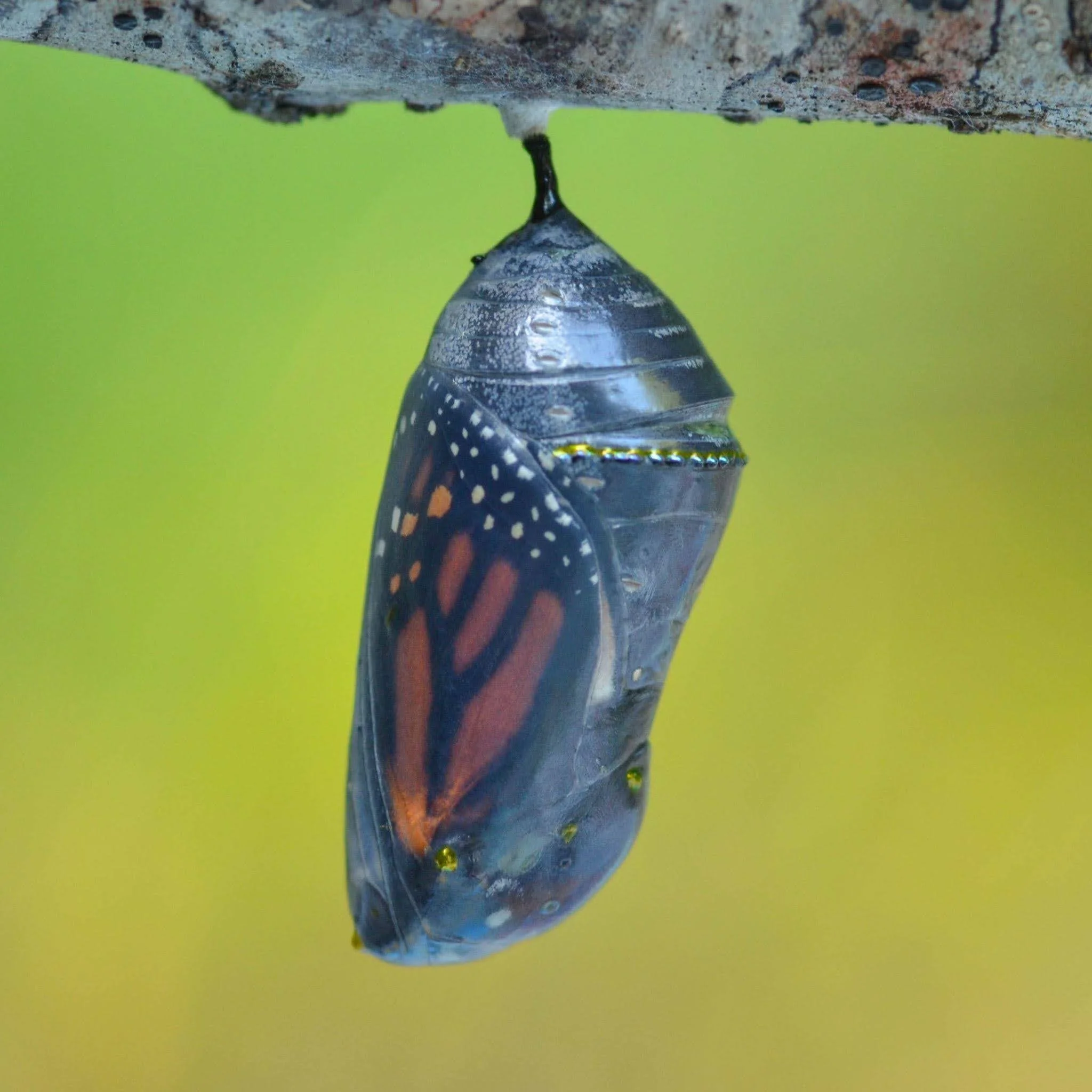
The jade green chrysalis often looks like it’s decorated with flecks of gold leaf - perfect for the regal growing Monarch inside! The chrysalis is transparent, the green color that you see is the butterfly inside.
The wings get their color as one of the last steps before the Monarch emerges in its final form. If you look closely, you can even tell its gender before it emerges!
Photos: Sharon Mammoser, Nature for My Soul
Monarch Population Decline
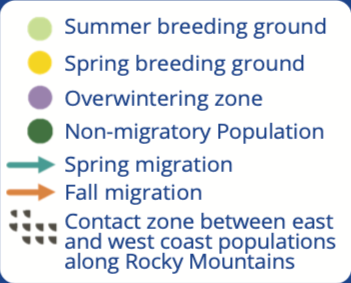
Each year the World Wildlife Fund publishes a report on the number of hectares covered by overwintering Monarchs in Mexico. Scientists recommend a threshold of at least 6 hectares (about 15 acres) to sustain a resilient eastern population and migration—a target reached only nine times from1993 to 2007 and just one time from 2008 to 2026. Learn more at Monarch Joint Venture.
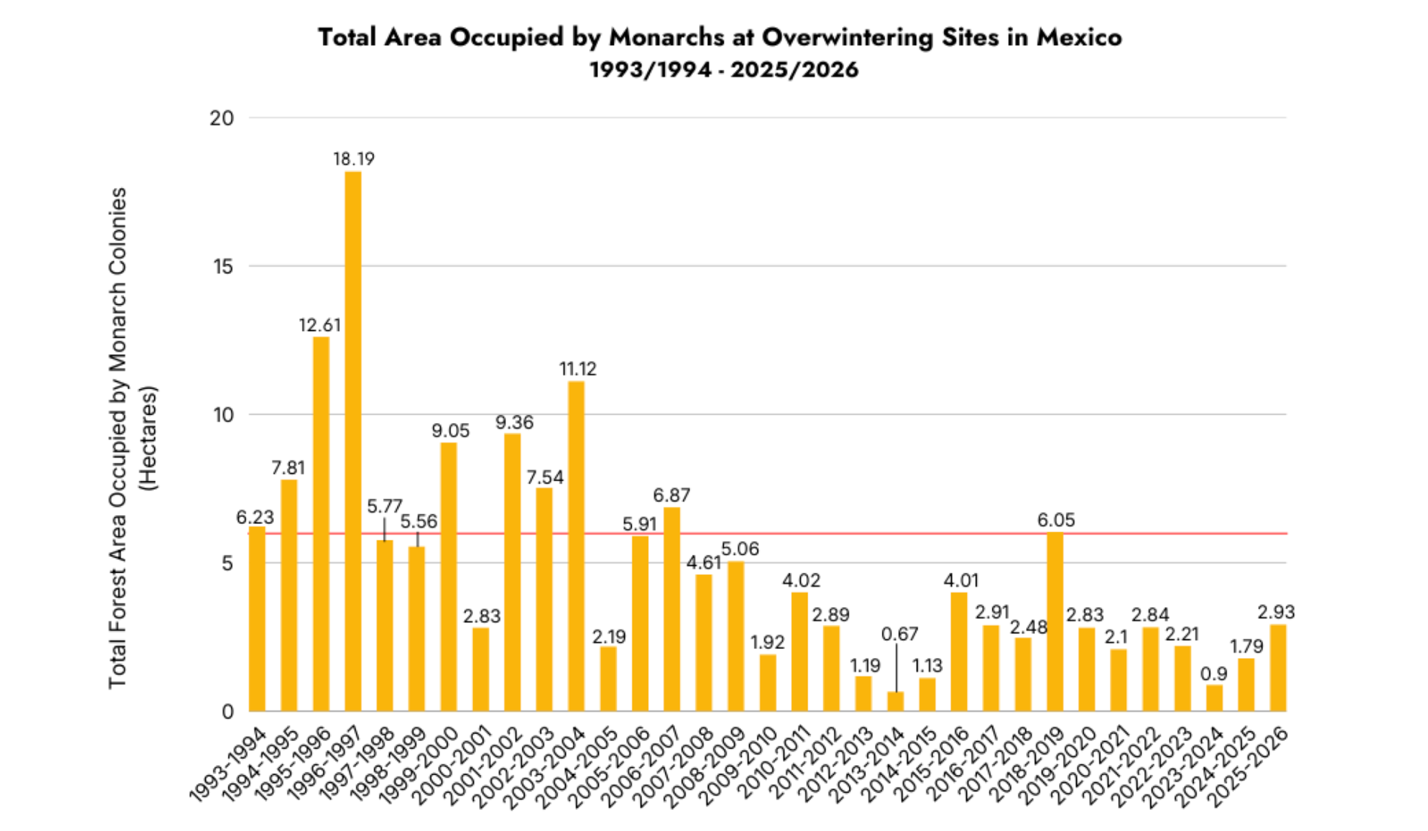
Illustration: Monarch Joint Venture
How You Can Help
Monarchs are endlessly mysterious and fascinating! A new community science project is revealing even more of their secrets, thanks to an incredibly small tracking device that transmits over the same frequency as Bluetooth. Learn more at Project Monarch.
The power to bring Monarch populations back lies with each of us:
Plant native milkweed! There are about 16 species native to North Carolina and more than 70 total in the United States.
Replace some of your lawn with habitat. Habitat offers so much more to wildlife than lawn. Add a variety of native grasses, flowers, shrubs, and trees.
Avoid using pesticides on lawns and gardens.
Provide nectar flowers, especially those that flower late in the season to fuel migrating butterflies, like native species of aster, goldenrod, blue mistflower, narrowleaf sunflower, and ironweed.
Create puddling stations - shallow moist areas rich with minerals.
Report Monarch sightings on Journey North.
Certify your garden through Monarch Watch’s Monarch Waystation Program or Bee City USA-Asheville, and let neighbors know by posting a sign.
Encourage teachers to register their classrooms in the Symbolic Monarch Migration program.
Photos: Ruth Gonzalez (top), Sharon Mammoser, Nature for My Soul (bottom).
Thank You
Many people and organizations made this Butterfly Trail possible. See the full list.
For the Monarch Butterfly, we’d like to give a special thanks to:
Dr. Matt Bertone, Department of Entomology and Plant Pathology, NC State University for taking photos of their butterfly specimens for the freestanding wings.
Town of Black Mountain for hosting the station.
Nina Veteto for designing the coloring page.
Lauren Gingery for illustrating the life cycle.
Gabriel Slater for webpage design.
Jill Jacobs at Spriggly’s Beescaping for interpretive sign design.
And these incredible photographers:
Sharon Mammoser, NatureForMySoul.com
Ruth Gonzalez
Kim Bailey, Milkweed Meadows Farm