
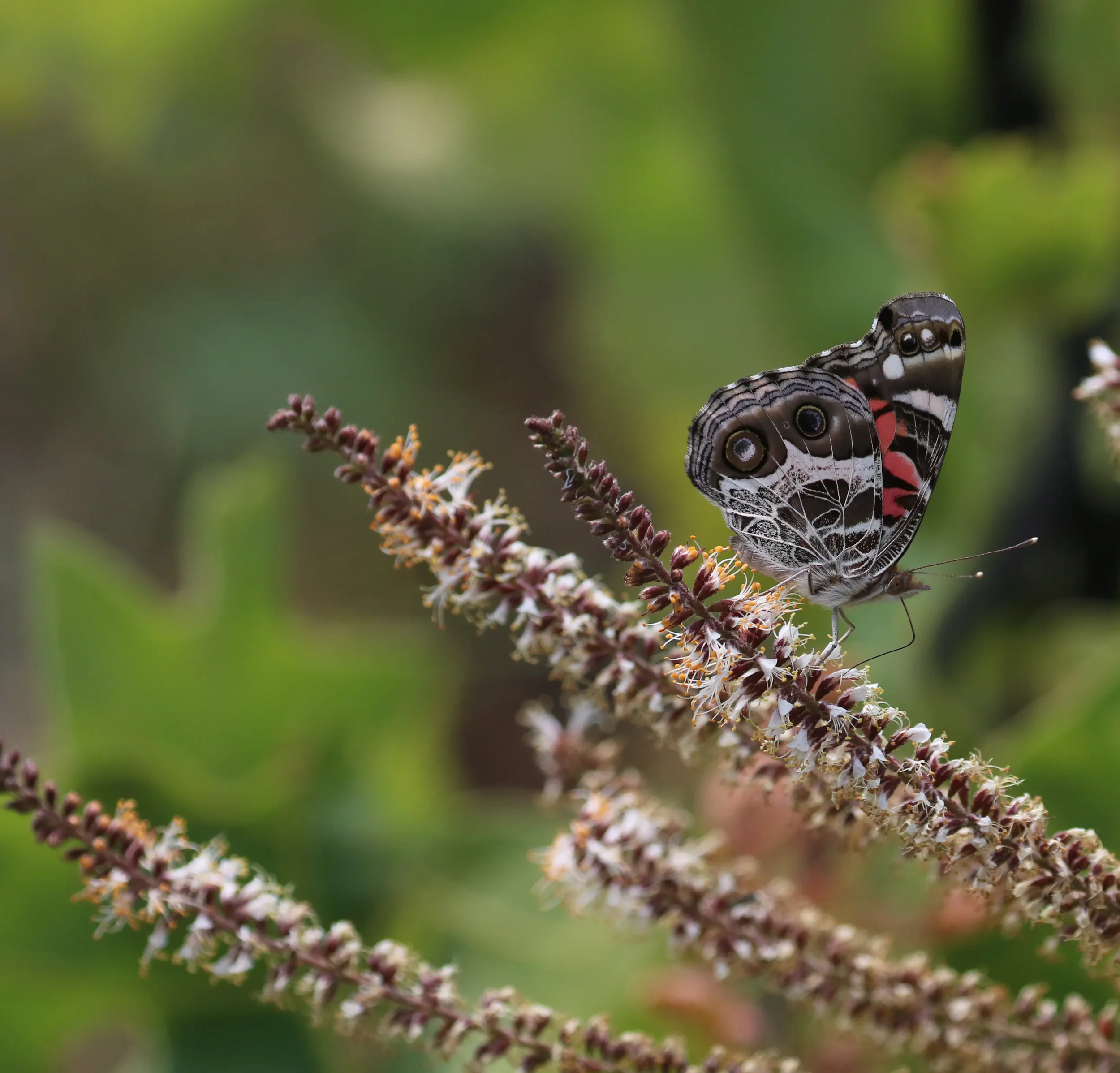
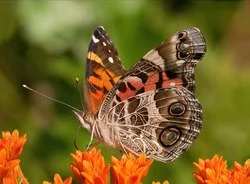
American Lady
Vanessa virginiensis
Photo: Will Stuart
Black Mountain Primary School, 301 E State St, Black Mountain, NC 28711
Look for the American Lady butterfly in open spaces, like fields, roadsides, parks, and gardens.
Thanks to Our Sponsors
Lipscomb Family Foundation
Anonymous: “Given with love of pollinators and hope for their survival for generations to come.”
Partial funding provided by The Black Mountain Swannanoa Valley Endowment Fund (an affiliate of The Community Foundation of Western North Carolina)
Meet the Butterfly
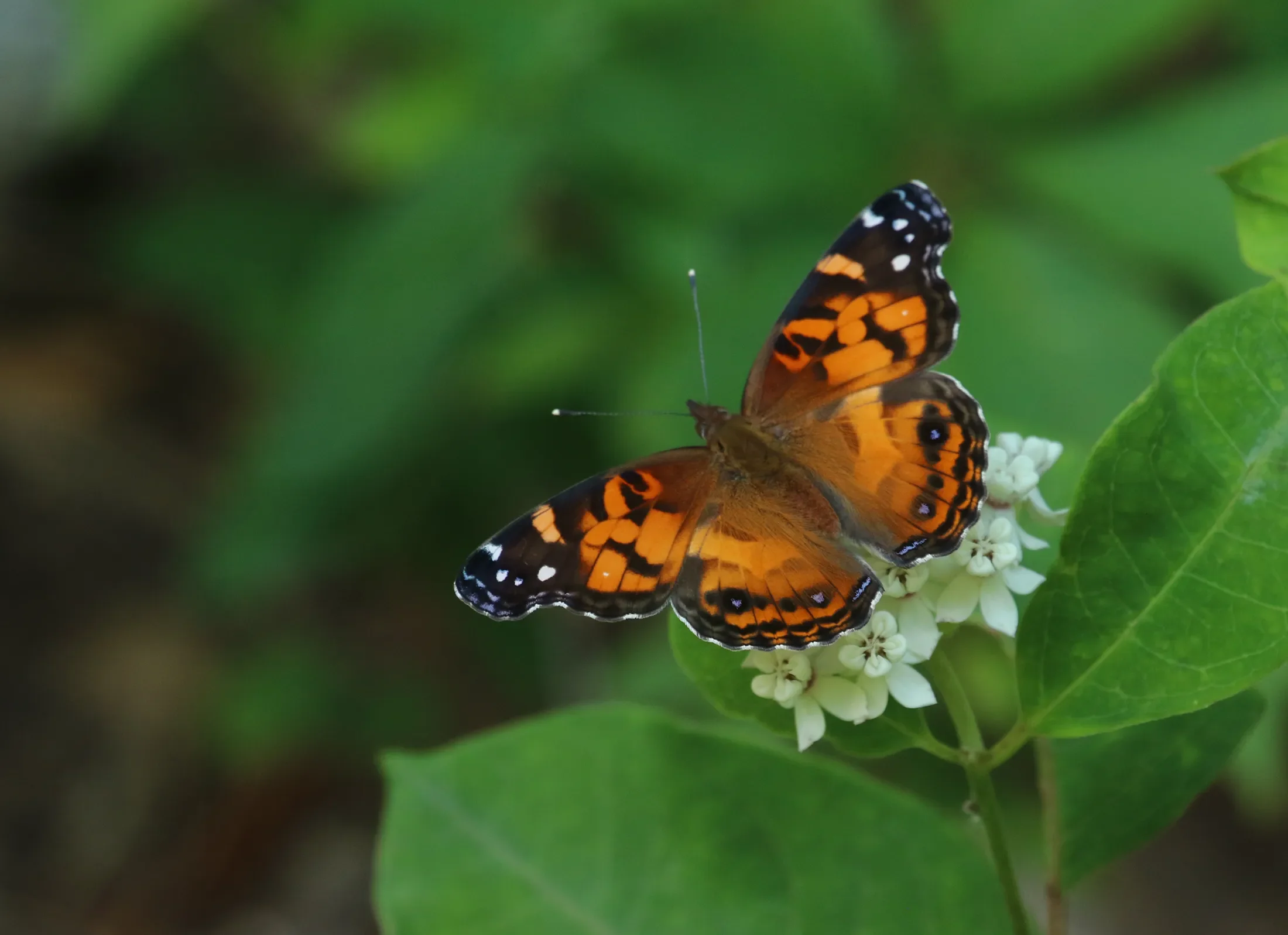
The American Lady has been known by many names including the American Painted Lady, Hunter’s Butterfly, and Painted Beauty.
From wing tip to wing tip, American Ladies average only 2.25 inches.
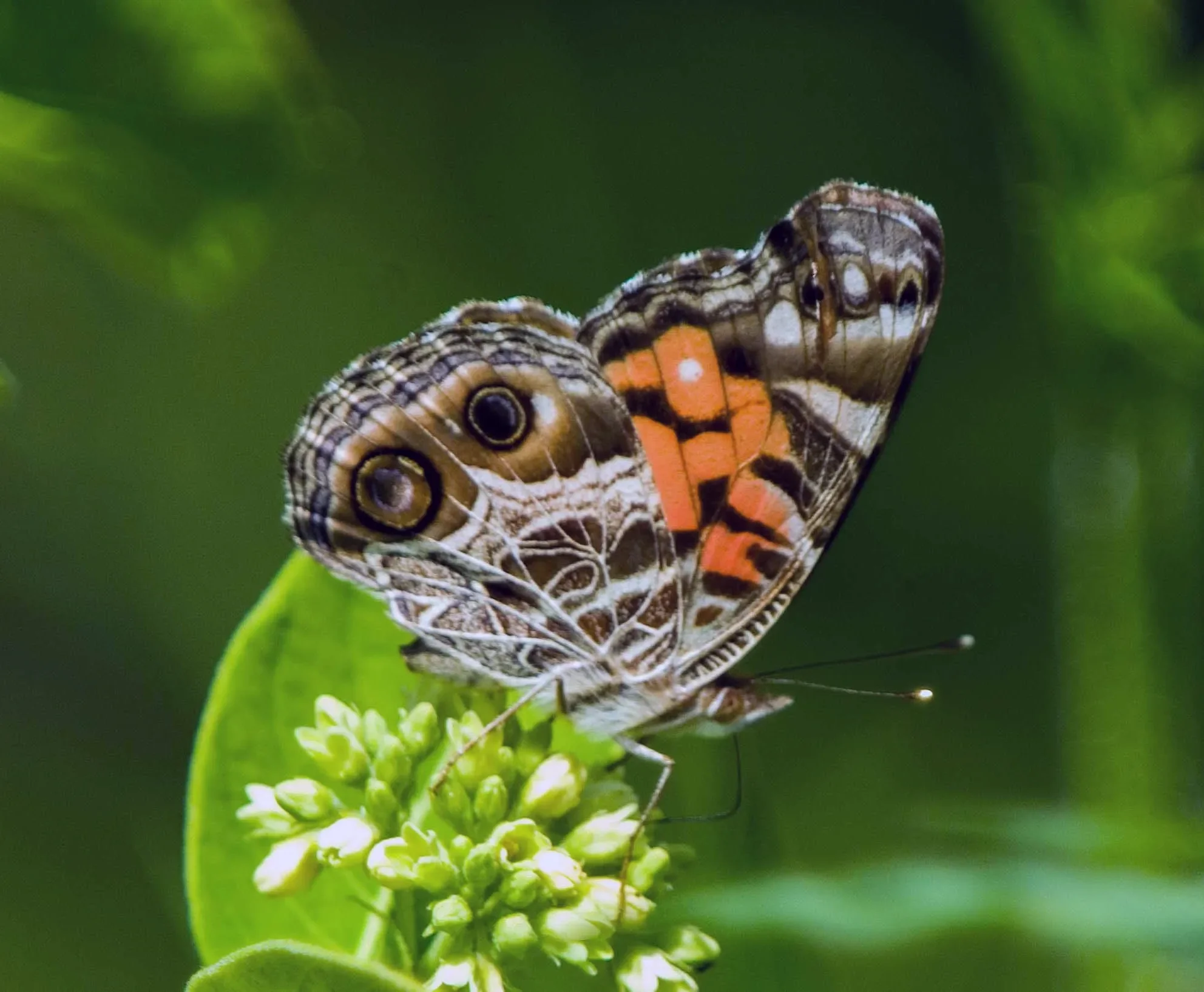
Photo: Dr. Douglas Tallamy. Background Photo: Will Stuart
Distribution & Genders
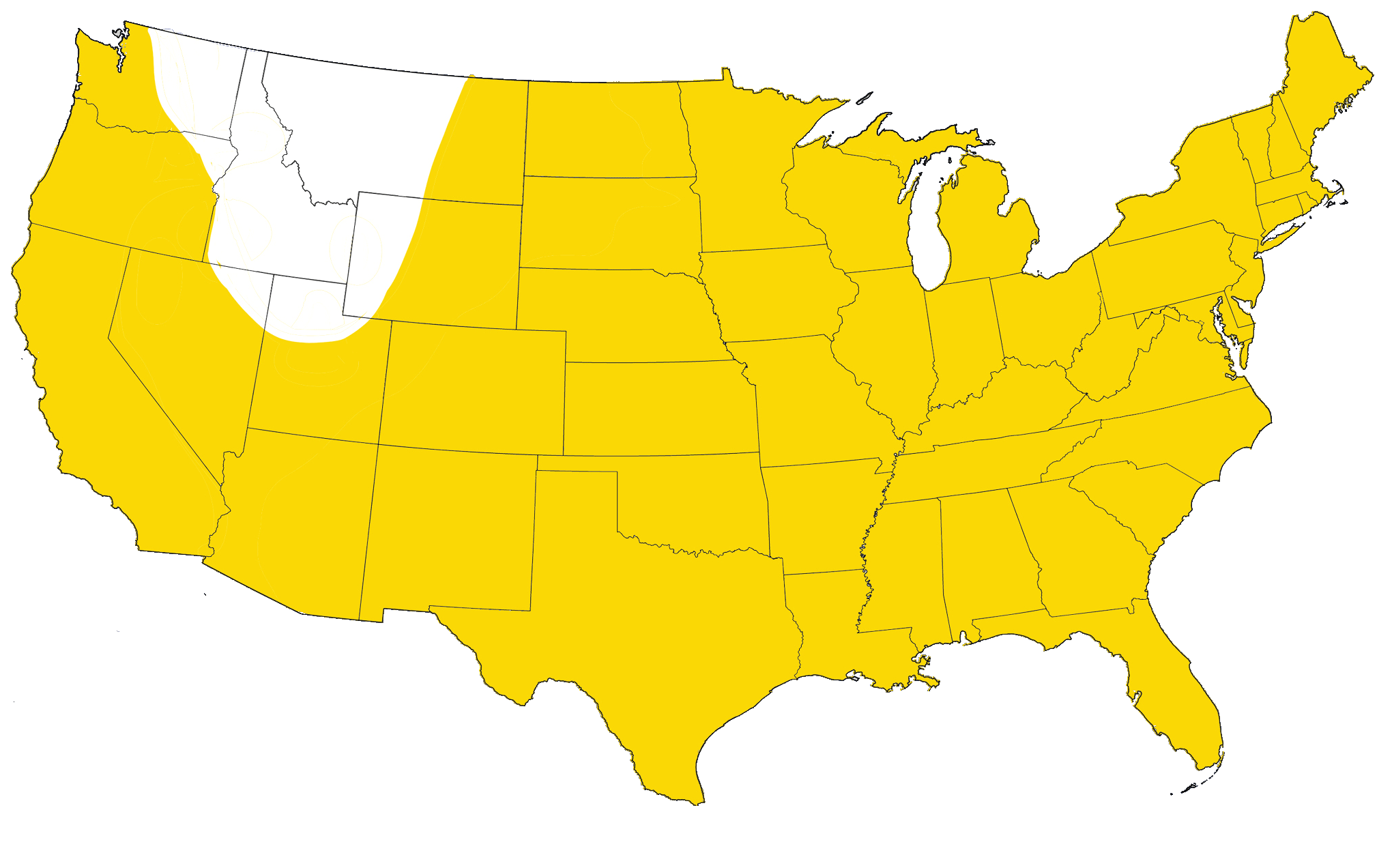
The American Lady is distributed across most of the United States, southern Canada, and parts of Mexico.
Males may be a little more vibrant, but all American Lady butterflies that emerge in fall tend to be more muted than those emerging in spring or summer.
Some butterflies rely on chemical pheromones to find mates, but American Lady females use visual cues to choose their mates, like flight patterns and displays. Males are often seen patrolling their territory up high while females tend to stick closer to their host and nectar plants. Rest assured, they are watching each other.
The American Lady has both false eyespots and false spider webs! If you were an insect looking for a meal, would you think twice before getting close to the American Lady’s cobwebs?
Photo: Phyllis Stiles
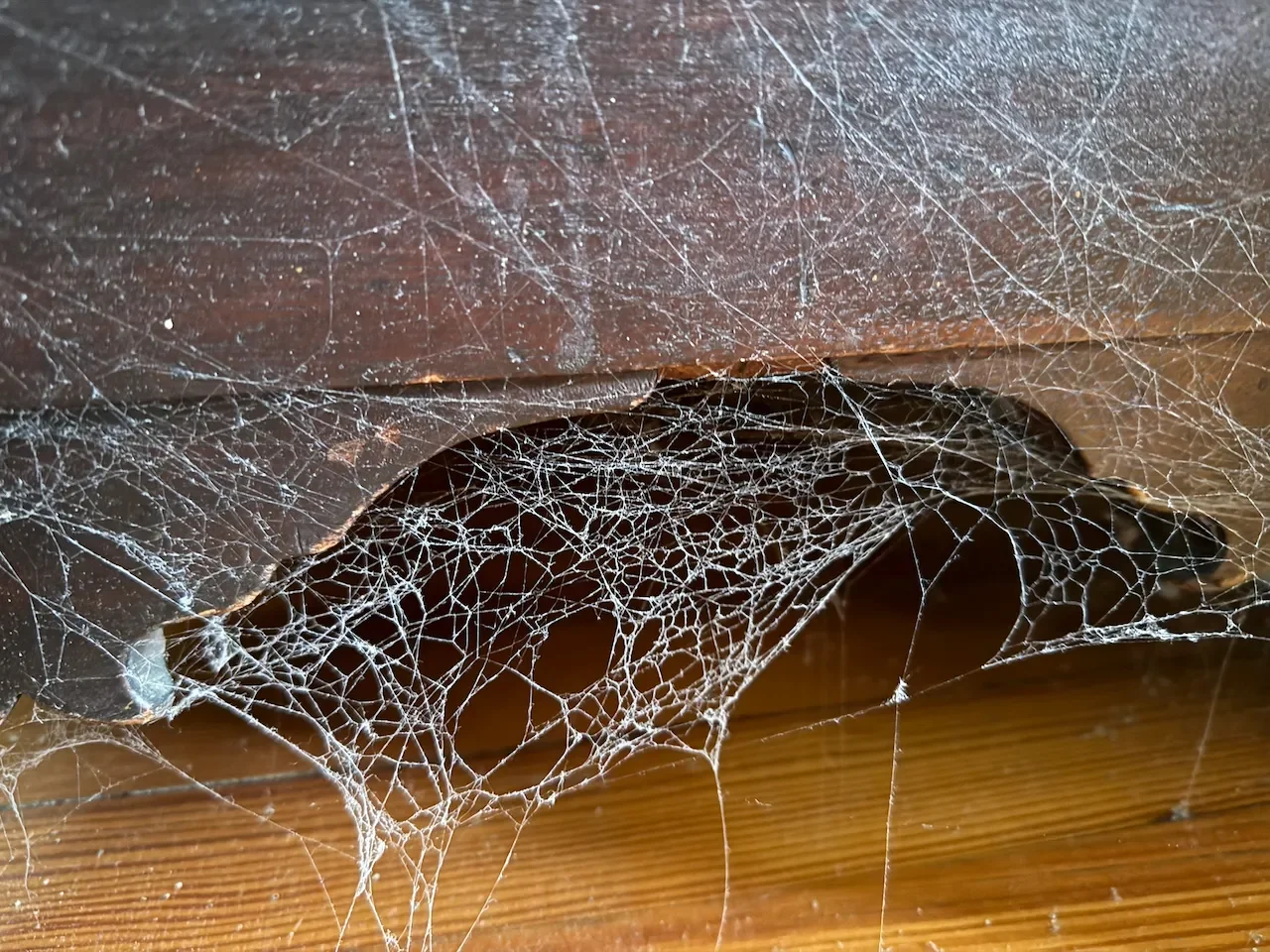
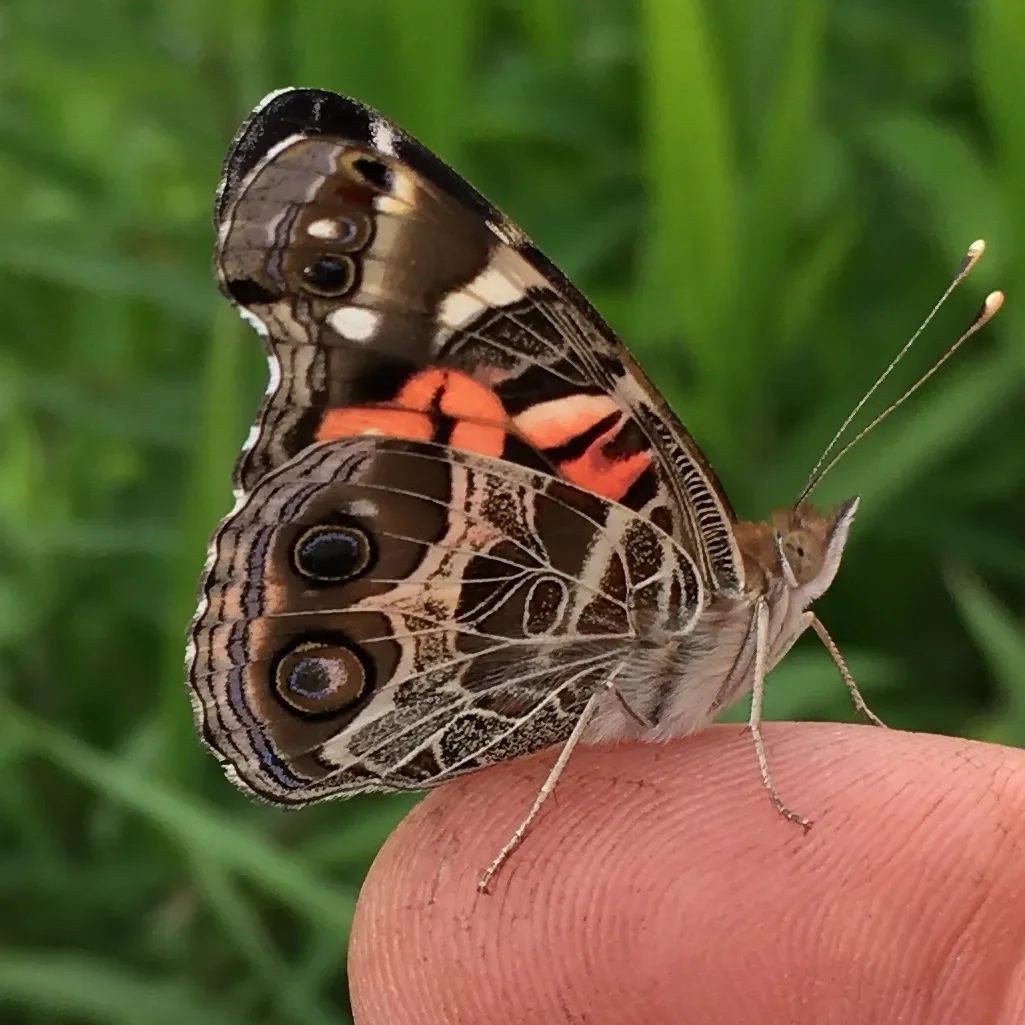
When almost all butterflies fold their wings, those under (ventral) wings look different from their open (dorsal) wings. This is an evolutionary defensive tactic. When they are resting with folded wings, they are more vulnerable.
Photo: Pete Dixon

American Lady Life Cycle
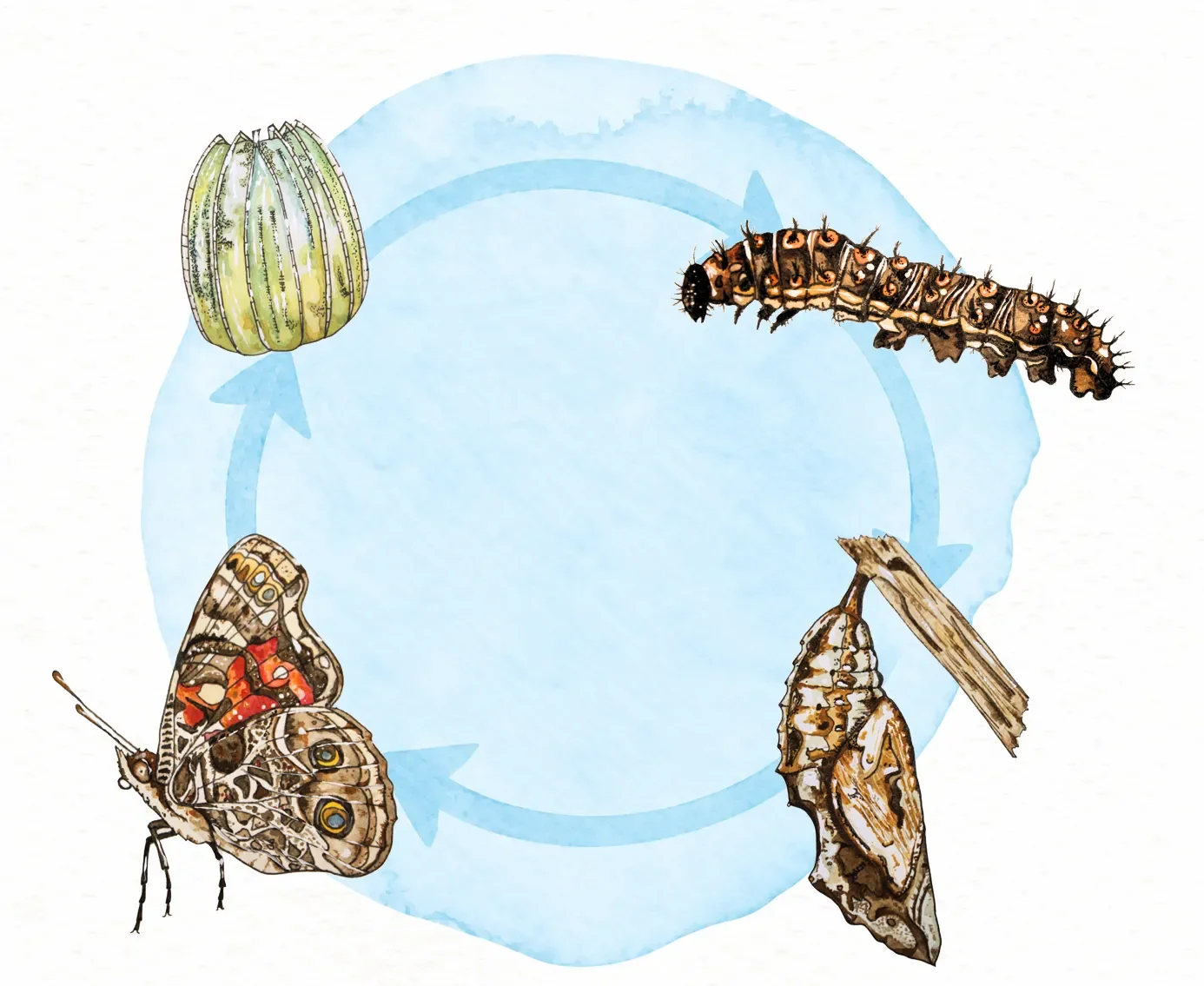
Egg
Butterfly
Caterpillar
Chrysalis
Illustration: Lauren Gingery
In which life cycle stage does the American Lady overwinter? Experts disagree, but it seems to vary depending on location. Some argue that this butterfly is unique because it can overwinter either in its adult or larval form! In North Carolina’s mountains, you may be lucky enough to spot them sunning on warm winter days.
If it overwinters as a caterpillar its metabolism slows down into a dormancy state known as “diapause”– kind of like hibernation. It may be hidden among the dead leaves, possibly burrowed a bit underground or under a rock, and often at the base of a host plant so it has something to eat immediately when it comes out.
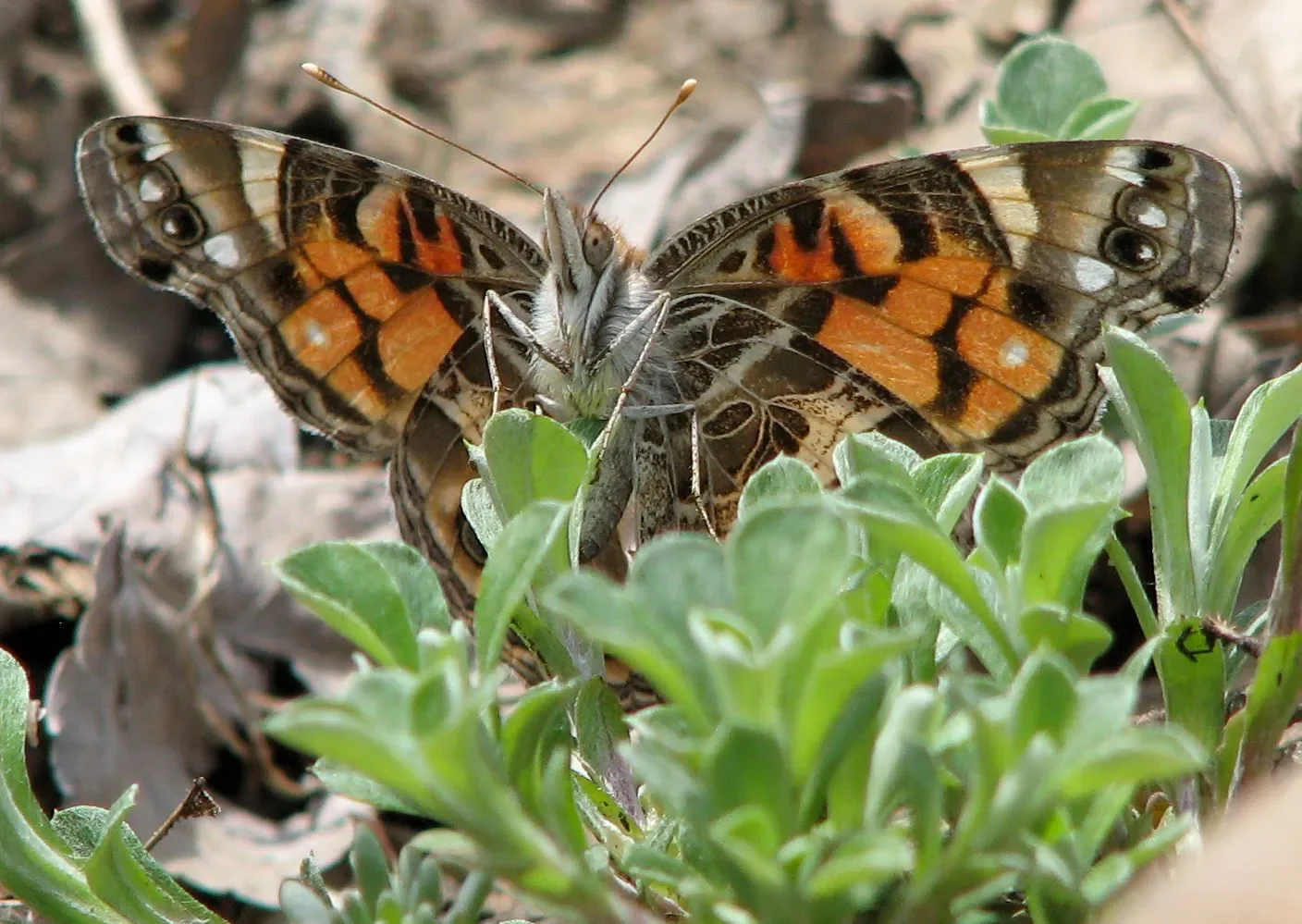
All butterflies taste with their feet.
That’s one of the ways they confirm a plant is the right species before laying eggs.
The American Lady is a “multivoltine” species, it can have several generations in one season depending on that year’s weather. Years with warmer springs and moderate summer rainfall tend to produce more generations, years with later spring frosts and dry summers produce fewer.
Background Photo: Janet Allen
Caterpillar Host Plants
The American Lady’s caterpillar host plants are in the Asteracea family. Although there are thousands of plants in this family, this butterfly particularly prefers species in the Antennaria and Cudweed genera.
In Western North Carolina, two of its favorite host plants are Pussytoes and Sweet Everlasting. Both plants are great additions to a pollinator garden, not only for their unique beauty, but also because of their function.
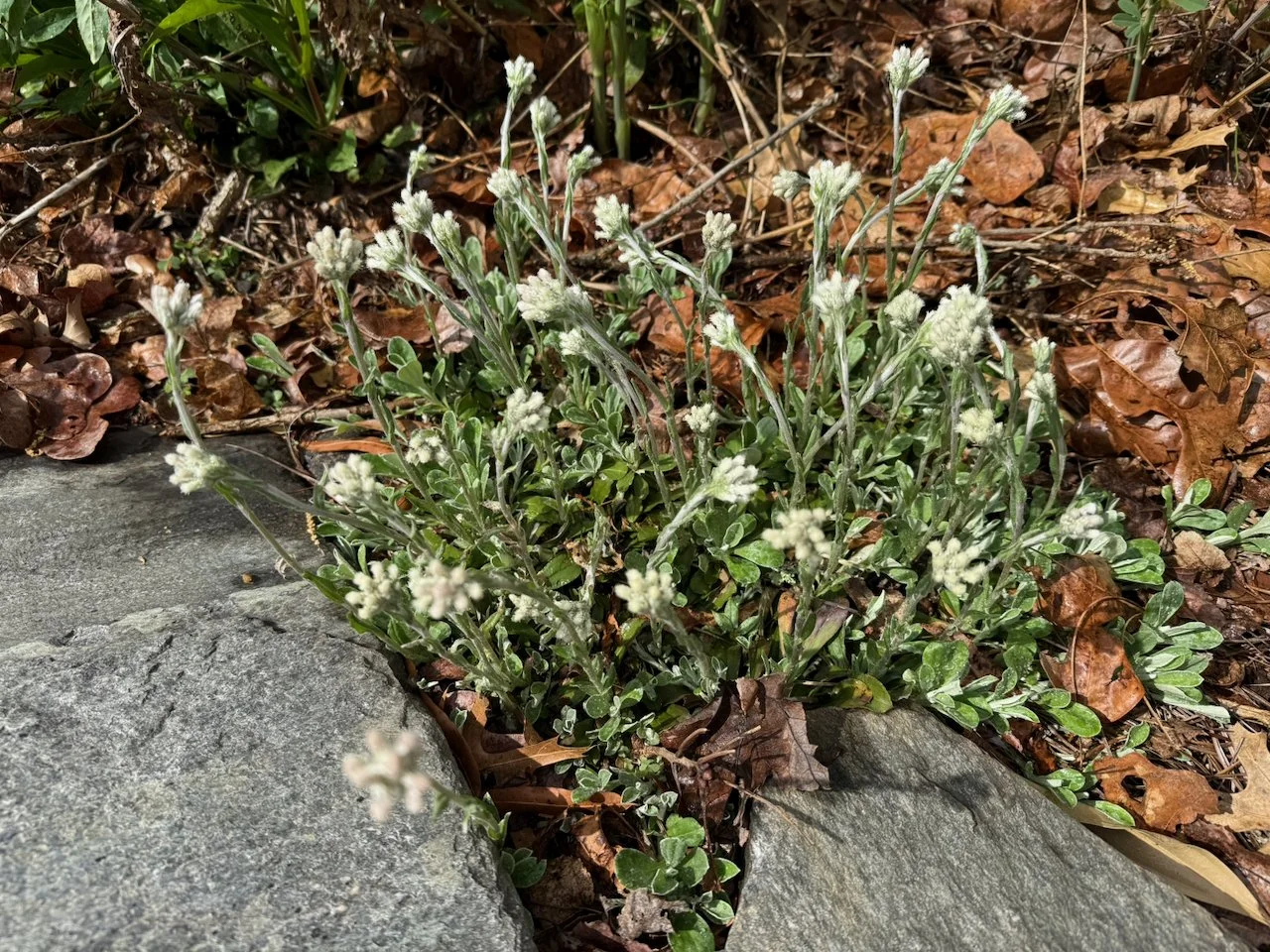
Pussytoes
Antennaria plantaginifolia
Greyish green and fuzzy, Pussytoes makes a great groundcover, acting as a “living mulch” to keep the garden hydrated.
Photo: Phyllis Stiles
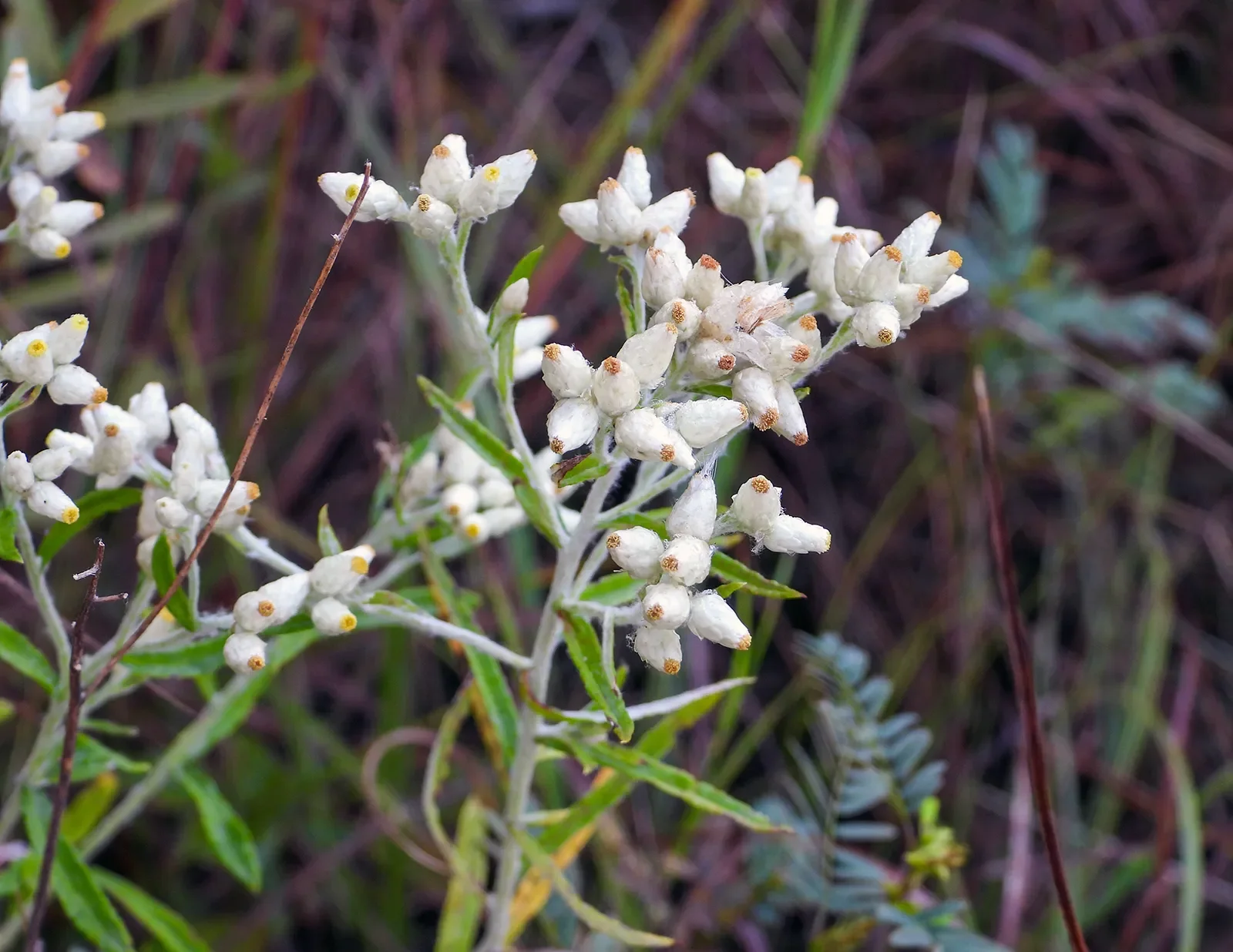
Sweet Everlasting
Pseudognaphalium obtusifolium
Sweet Everlasting (AKA Rabbit Tobacco or Fragrant Cudweed) is said to be a deer repellant that releases a sweet smell when the leaves are crushed. Some people liken it to maple syrup.
Photo: Brian Woolman/Shutterstock
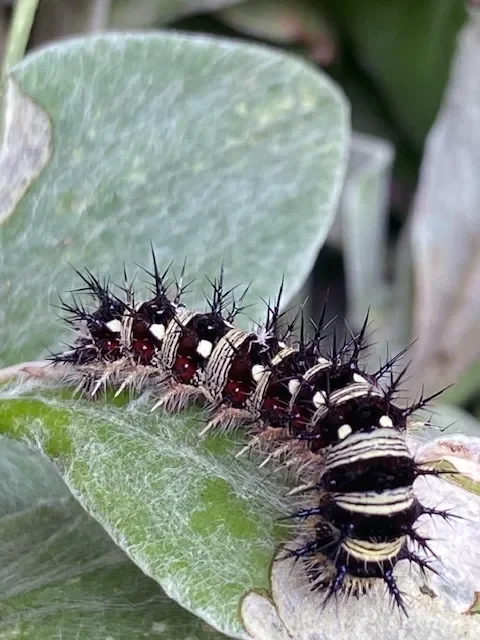
Do These Spikes Scare You?
They’re harmless but hopefully the animals that want to eat these caterpillars don’t know that.
Watch the video to see how this caterpillar only eats the top “hairy” layer of the Pussytoes leaf.
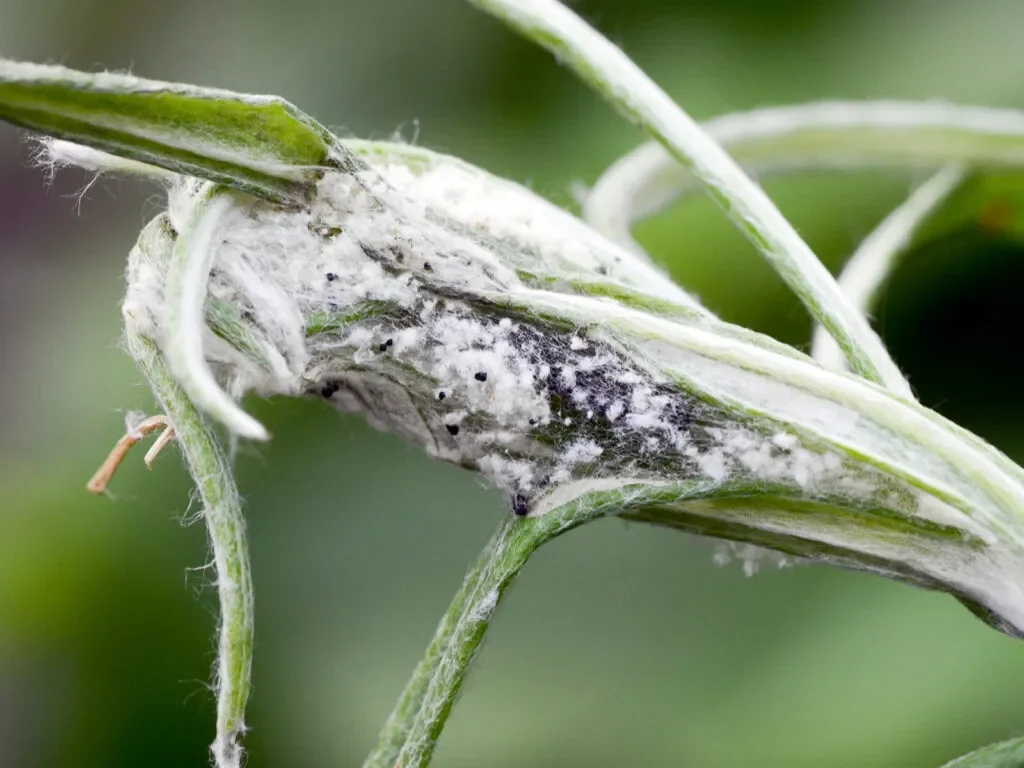
Most American Lady butterflies lay single eggs in the foliage where they will hatch into caterpillars that use the “hairs” on the leaves to build shelters to hide in.
Caterpillar Photo & Video: Virginia Currie, Shelter Photo: Janet Allen
Do You Think We Look Alike?
These two Ladies may look similar, but they’re actually very different! To an untrained eye it is difficult to distinguish the American Lady (Vanessa virginiensis) from the Painted Lady (Vanessa cardui). Even their names are closely related. Indeed, the American Lady is often called the American Painted Lady. Until the 1770’s, they were considered one species.
Physical Differences Between the Species
Hint: Butterflies spook easily. To get a good look at them, be very still and/or use binoculars.
Dorsal (Open) Wings: A tiny white spot within an orange band on the outer edge of the upper wings--American Lady has it, Painted Lady does not.
Ventral (Folded) Wings: The American Lady has two big, fat eyespots and a cobweb-like pattern, the Painted Lady has four smaller eyespots and no cobweb-like pattern.
Painted Ladies tend to be larger with as much as 3.5” wingspan, versus the American Lady’s as much as 2.6” wingspan.
American Lady wings might be more rounded than Painted Lady’s more pointy wings.
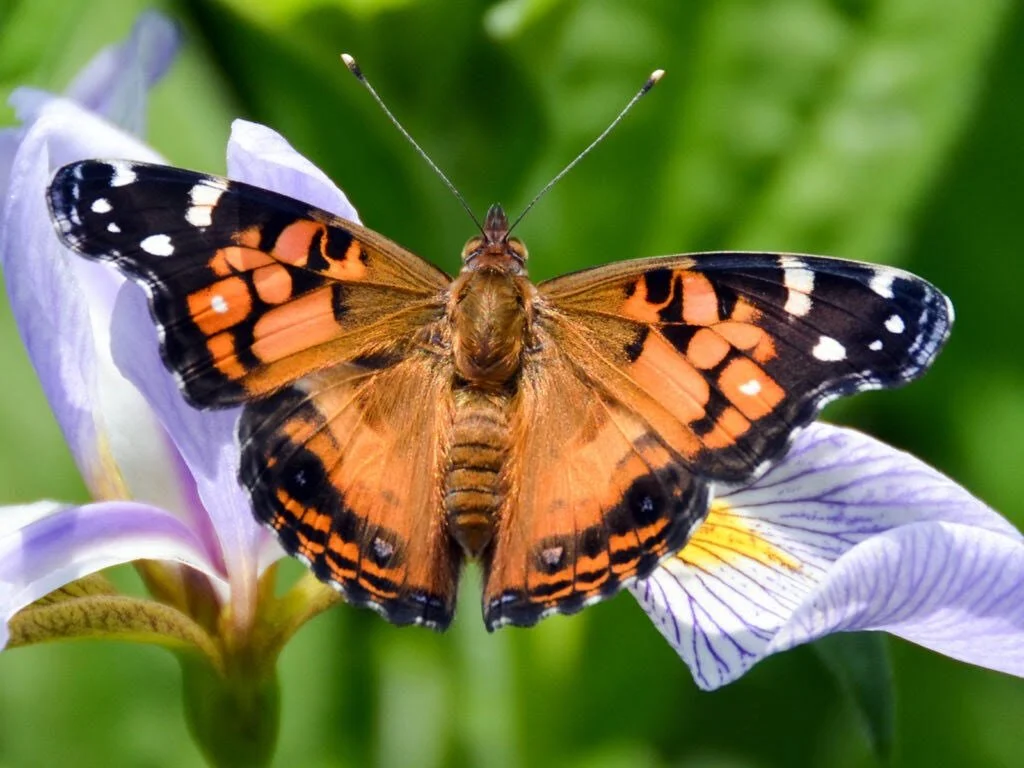
Photo: American Lady by Janet Allen
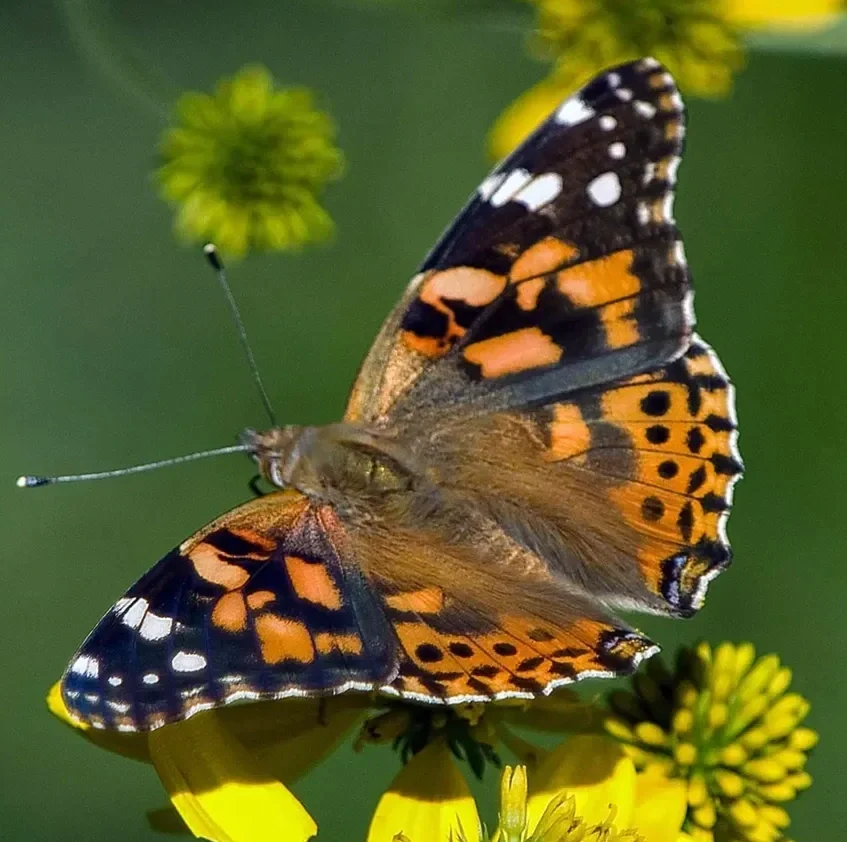
Photo: Painted Lady by Dr. Douglas Tallamy
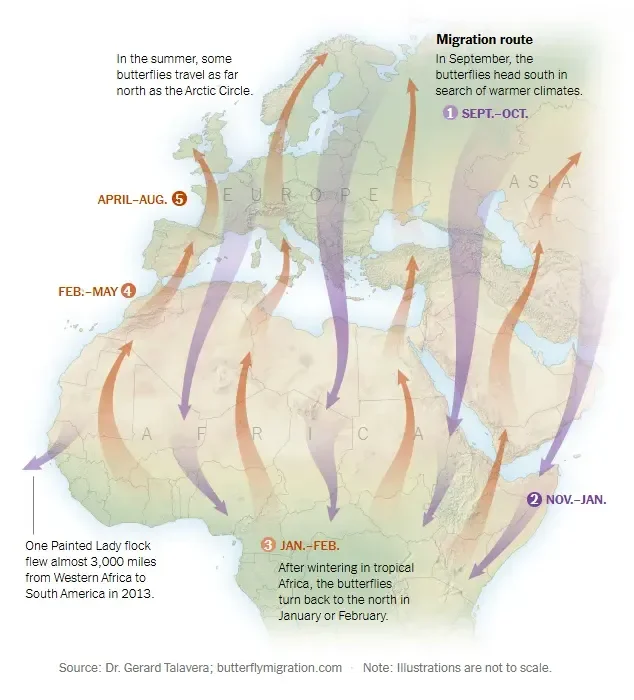
Two Ladies That Travel in Different Circles
The American and Painted Lady behaviors are vastly different! Though it does not follow a fixed migration route like some butterflies, the American Lady migrates more like human “snowbirds.” It follows warm weather. When it starts to cool down (August–October), this butterfly flies south, overwintering in the more southern states. In spring and early summer (March to June), you will see this butterfly flying north towards southern Canada.
By contrast, the Painted Lady is truly “cosmopolitan,“ found on every continent except Antarctica. (Another famous cosmopolitan species is the killer whale.)
Adaptability is key to being a cosmopolitan species. Most butterfly caterpillars can only eat certain species of host plants within a certain plant family or genus, but the Painted Lady caterpillar can digest lots of different host plants found all over the world.
Unlike the Monarch’s single generation migration from Canada to Mexico, the Painted Lady follows a multi-generation migratory route throughout the year. Some Painted Ladies even migrate across Africa’s treacherous Sahara Desert all the way to Scandinavia, more than 9000 miles!
How You Can Help
American Ladies are very adaptable with a wide range of host plants. They’re not threatened, but you can still help reverse decline by taking action:
Add caterpillar host plants like Pussytoes and Sweet Everlasting to your garden.
Include flowers in your garden for nectaring adults.
Remove exotic invasive plants that displace native species.
Avoid pesticide use.
Leave the leaves for overwintering caterpillars.
Learn more about Pollinator Gardening Principles and create a certified pollinator habitat in your yard.
Photos: Sara Bright/Alabama Butterfly Atlas (top) and Will Stuart (bottom)
Thank You
Many people and organizations made this Butterfly Trail possible. See the full list.
For the American Lady Butterfly, we’d like to give a special thanks to:
Dr. Matt Bertone, Department of Entomology and Plant Pathology, NC State University for taking photos of their butterfly specimens for the freestanding wings.
Buncombe County Schools & Black Mountain Primary School for hosting the station.
Lauren Gingery for illustrating the life cycle.
Nina Veteto at Blue Ridge Botanic for designing the coloring page.
Gabriel Slater for webpage design.
Jill Jacobs at Spriggly’s Beescaping for interpretive sign design.
And these incredible photographers:
Pete Dixon
Will Stuart
Virginia Currie
Janet Allen
Sara Bright/Alabama Butterfly Atlas