
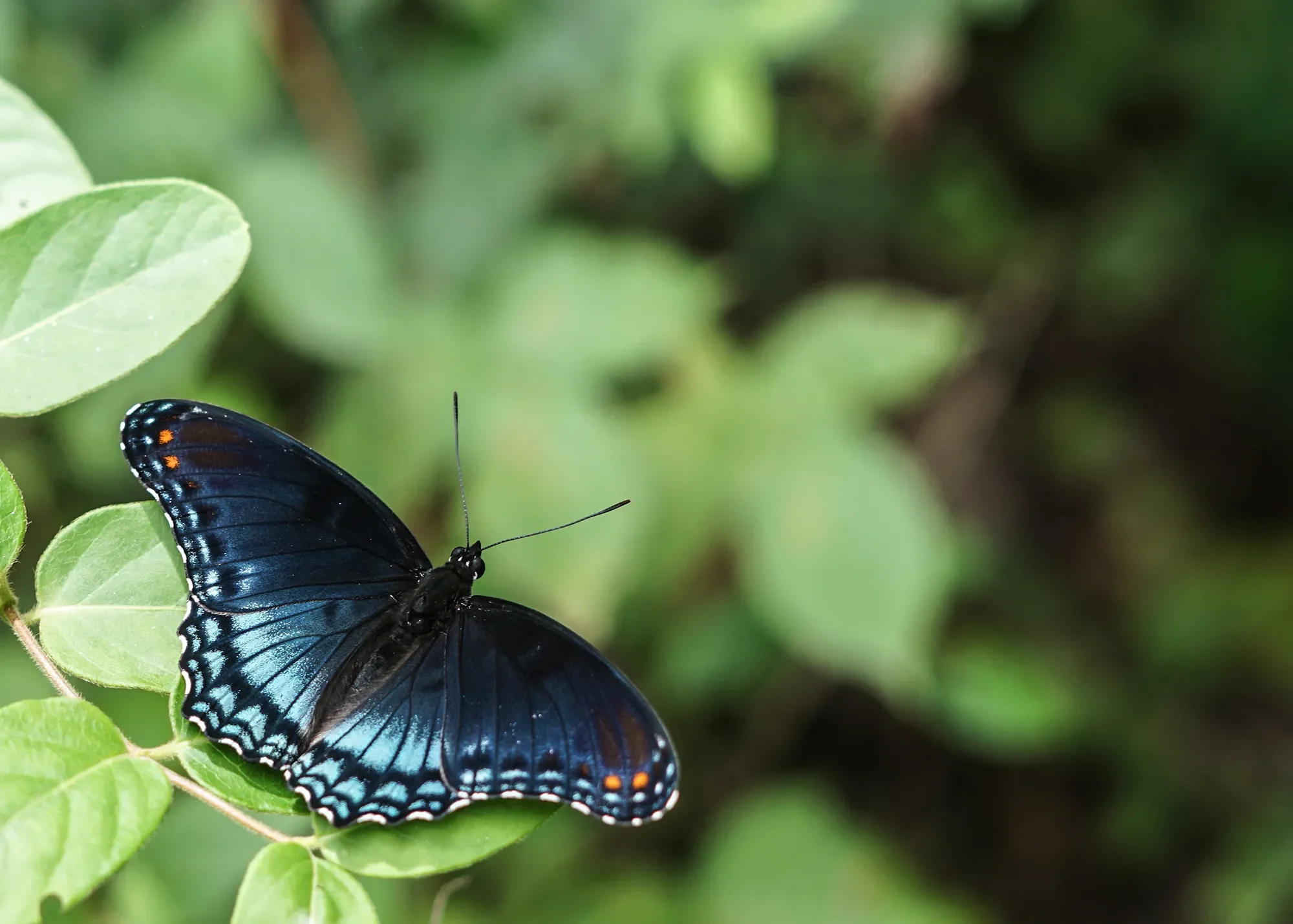
Red-spotted Purple
Limenitis arthemis astyanax
Photo: Pete Dixon

11 North Main Street Weaverville, NC
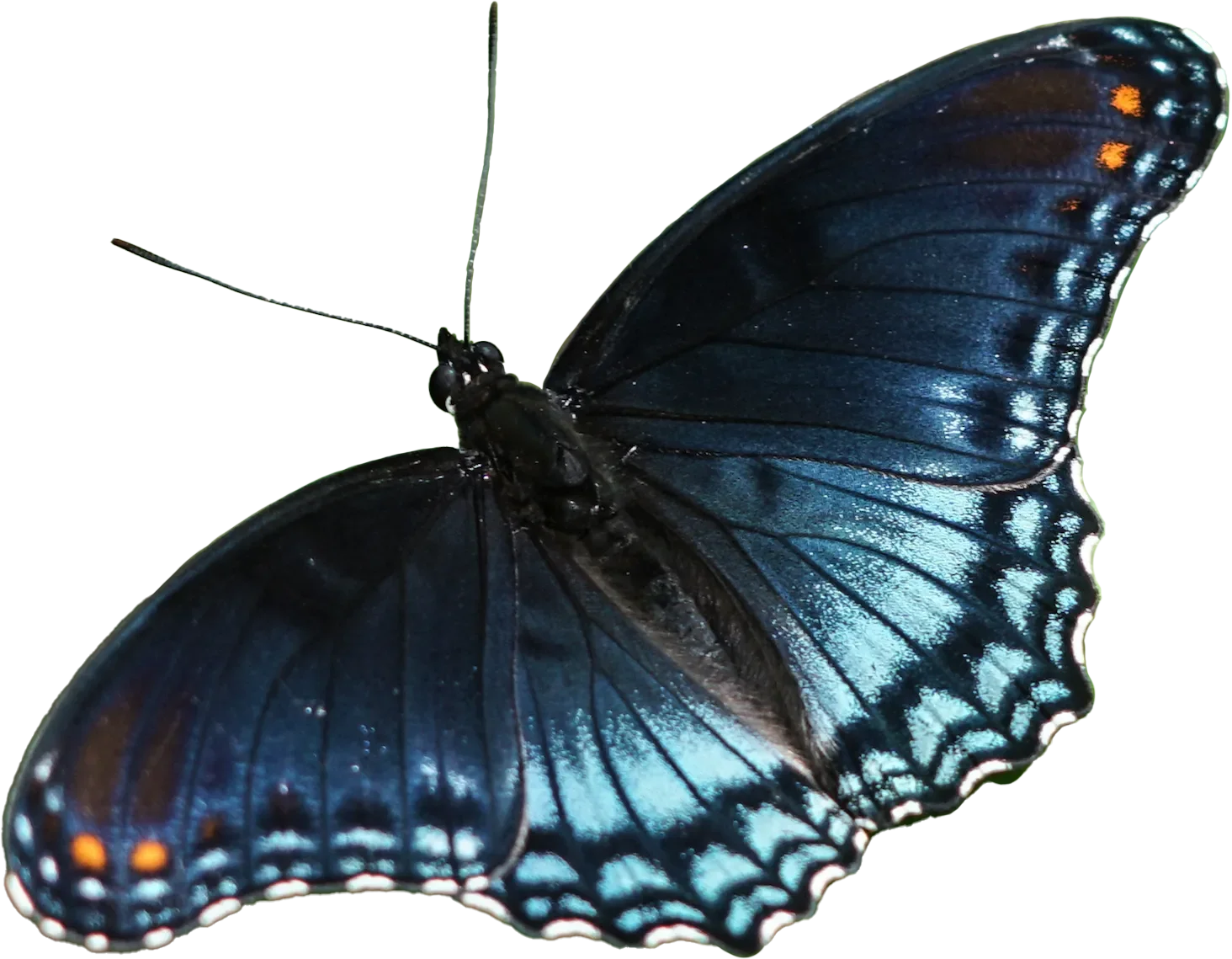
Look for the iridescent blue wings of the Red-spotted Purple next to Weaverville’s clock tower in the center of downtown. Thanks to Dr. Matt Bertone, NC State University, for providing the photo for the giant wings!
Hosted & Sponsored By:

Also Sponsored By:
Futch Family Foundation
in honor of Mary Richards Futch
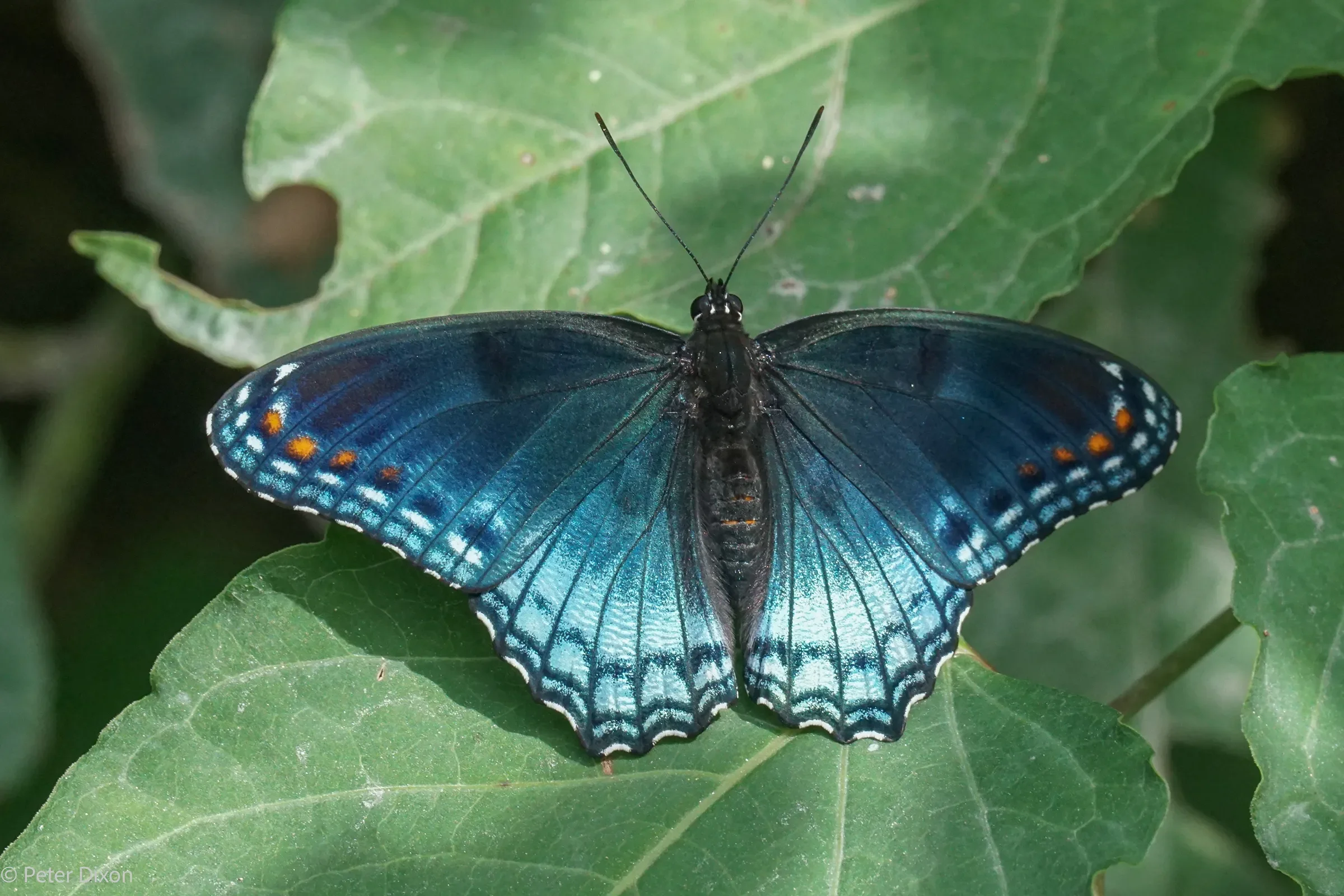
Meet the Butterfly
Red-spotted Purples have a dazzling iridescent glow when sunlight strikes them. Males and females look very similar except the female’s abdomen is larger.
Who would ever dream they have such “ugly duckling” beginnings?
Background Photo: Pete Dixon
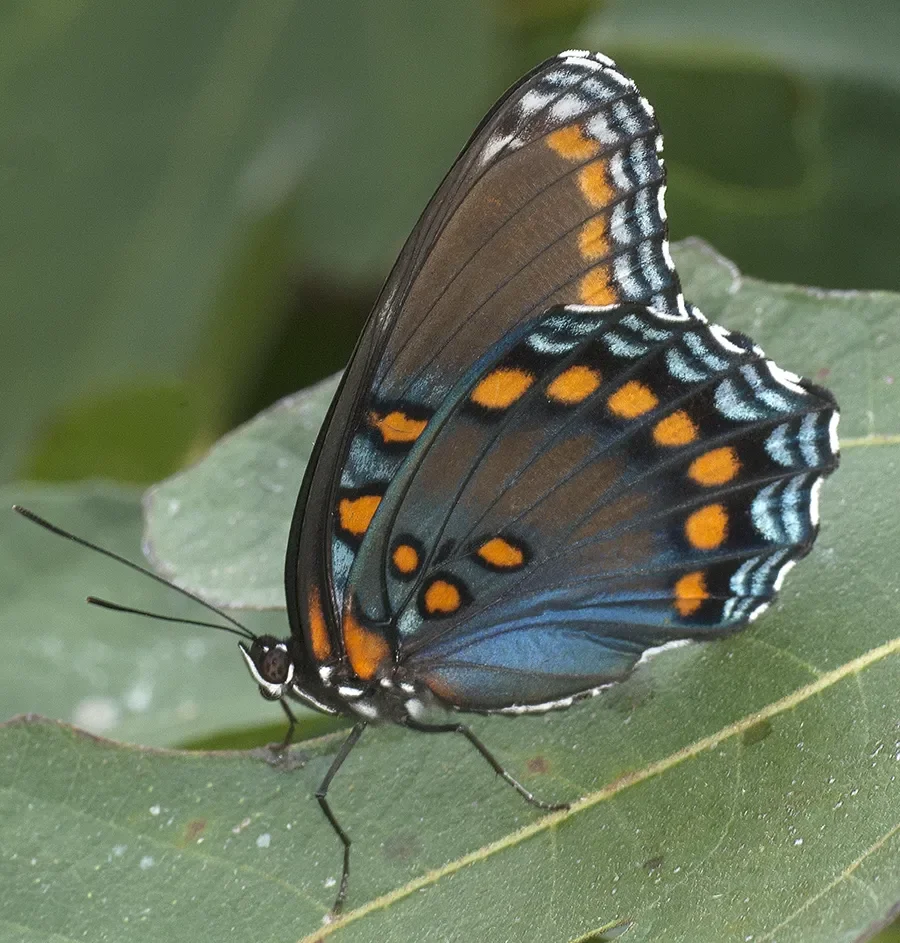
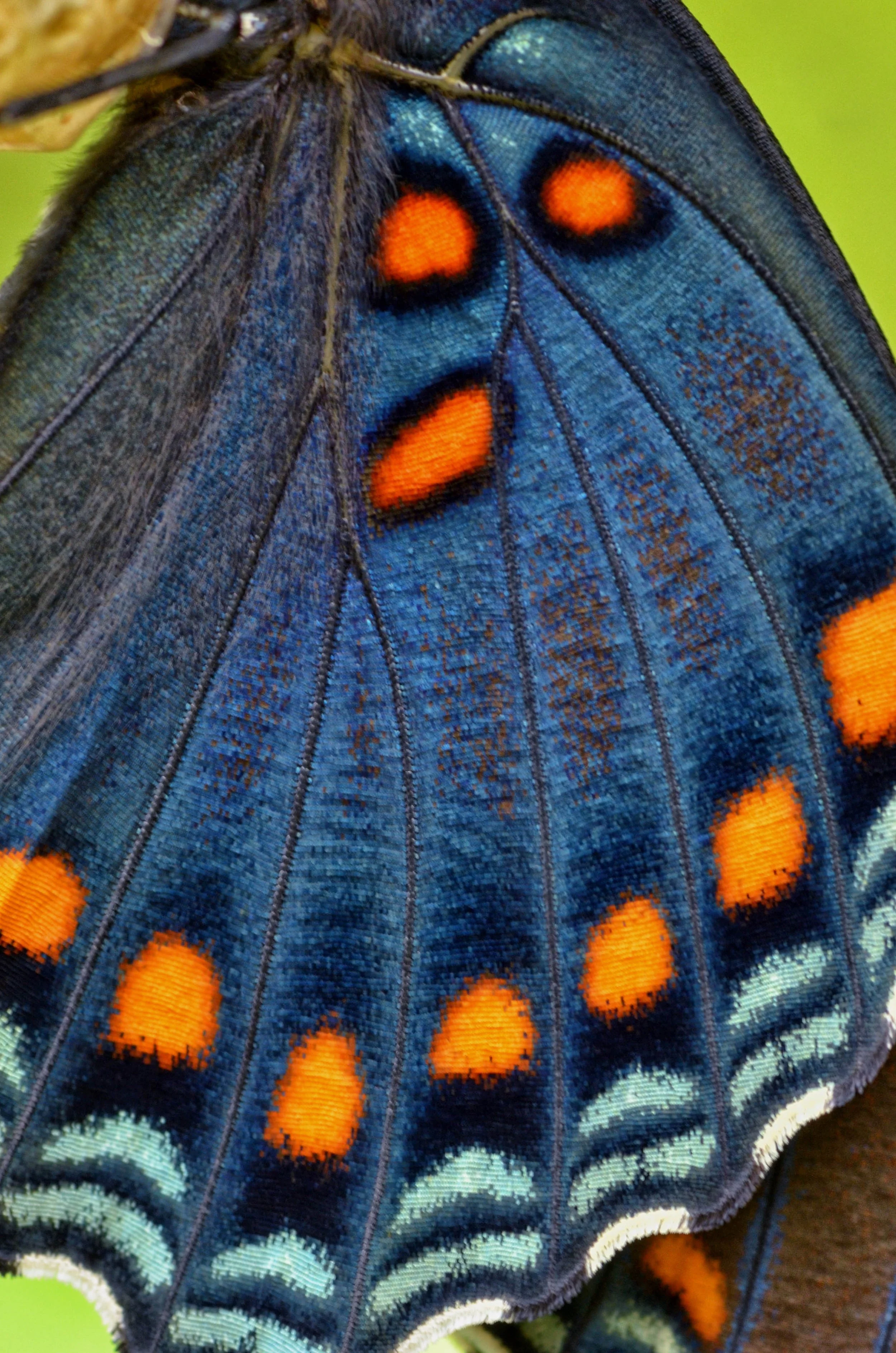
Its under (ventral) wings look very different from its upper (dorsal) wings. That’s possible because their wing membrane is covered in scales on each side, like roof shingles.
Like all butterflies, Red-spotted Purples belong to the Lepidoptera order, along with moths and skippers. The term Lepidoptera combines two Greek words, “lepis” meaning scales and “ptero” meaning wings. The "dust" that rubs off when you touch them is really thousands of delicate, microscopic scales.
Photo: @Sara Bright/Alabama Butterfly Atlas
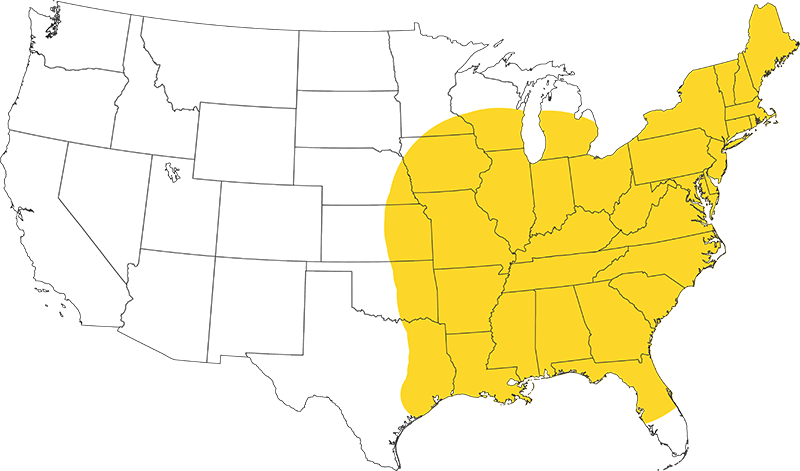
Limenitis arthemis astyanax Range Map
Wingspan & Distribution
With wingspans averaging 3.25 inches, Red-spotted Purples fly from April to October. You may see 2-3 generations of the Red-spotted Purple in Western North Carolina each year.
Their range extends from the Gulf Coast to southern Maine and westward along the southern Great Lakes to Minnesota and Iowa.
Photo: Pete Dixon
What’s in a Name?
Most organisms are identified by just two Latin words, the genus and the species, sort of like our family name and first name. But the Red-spotted Purple is trinomial: it has a genus, a species, and a subspecies (Limenitis arthemis astyanax).
When a species spreads widely, over time, populations in different regions adapt and evolve, developing consistent, inherited differences while still interbreeding. Scientists classify these populations as subspecies. That third name tells us which regional version of a species we are talking about.
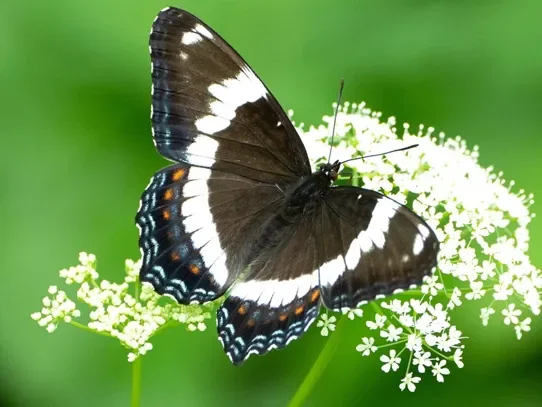
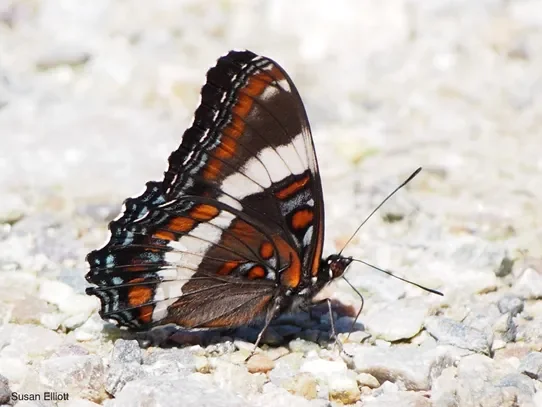
Unlike our local Red Admiral (Vanessa atalanta), the White Admiral (Limenitis arthemis arthemis) and Red-spotted Purple are the same species but they look very different.
In Canada, Alaska, and the northern continental United States, the White Admiral is easy to recognize by the bold white band that crosses its wings.
Photos: Susan Elliott
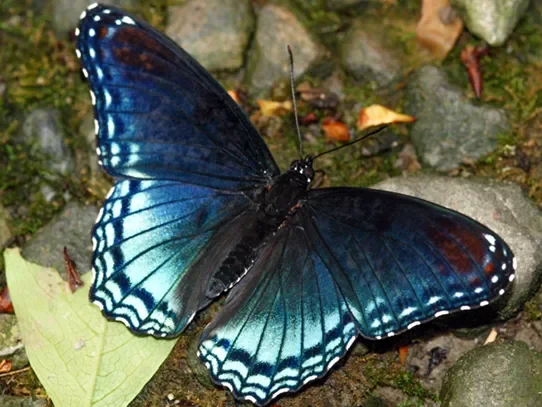
Farther south, the Red-spotted Purple (Limenitis arthemis astyanax) lacks that white band and instead displays small red spots along its upper wing edges.
Photo: Sharon Mammoser
Where the two subspecies overlap in the northeastern United States, they interbreed and produce offspring with mixed traits, such as faint white bands and partial red spots. These butterflies are known as intergrades. The subspecies phenomenen shows that evolution tends to be gradual, shaped by geography, environment, and time.
There are even third and fourth subspecies! The Arizona Red-spotted Purple (Limentis arthemis arizonensis) can be found in Arizona, New Mexico and Mexico! The Western White Admiral (Limentis arthemis rubrofasciata) is found in Canada from western Ontario to Alaska, south sporadically in the northern U.S. into Minnesota, Dakotas, Montana, and perhaps Idaho and Washington. Its Eastern range is uncertain, but it may reach the Atlantic coast in Canada and Maine.
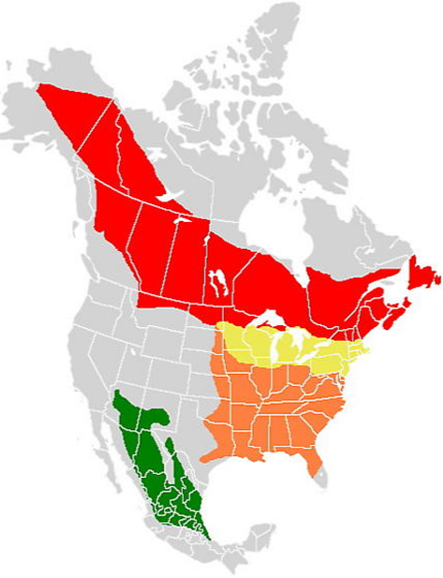
Range of Three Limenitis arthemis Forms
From Wikimedia Commons (created by Megan McCarty)
Red: White Admiral (Limentis arthemis form arthemis)
Salmon: Red-spotted Purple (Limentis arthemis form astyanax)
Yellow: area of overlap between White Admiral and Red-spotted Purple
Green: Arizona Red-spotted Purple (Limentis arthemis form arizonensis)
Copyright © 2010 (2009) Alex Covarrubiasderivative work: Meganmccarty, CC BY-SA 2.5, via Wikimedia Commons
Master of Disguise!
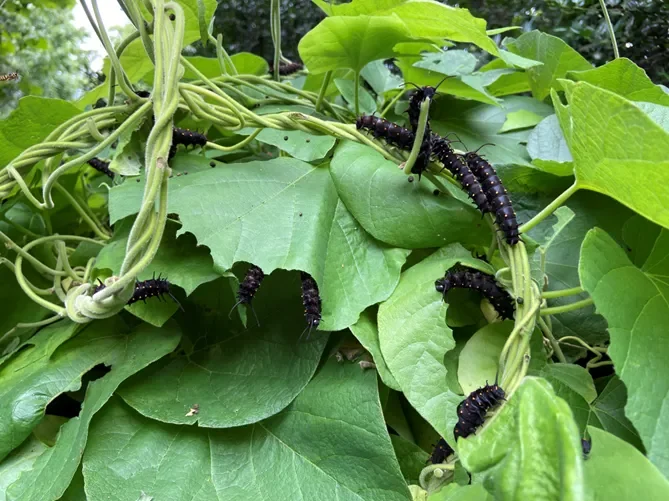
The White Admiral and the Red-spotted Purple are the same species but the Red-spotted Purple has evolved to mimic the toxic Pipevine Swallowtail butterfly. In fact, their ranges are the same as the Pipevine Swallowtail’s host plant, Dutchmen’s Pipe.
Pipevine Swallowtail caterpillars on Dutchmen’s Pipe Photo: Phyllis Stiles
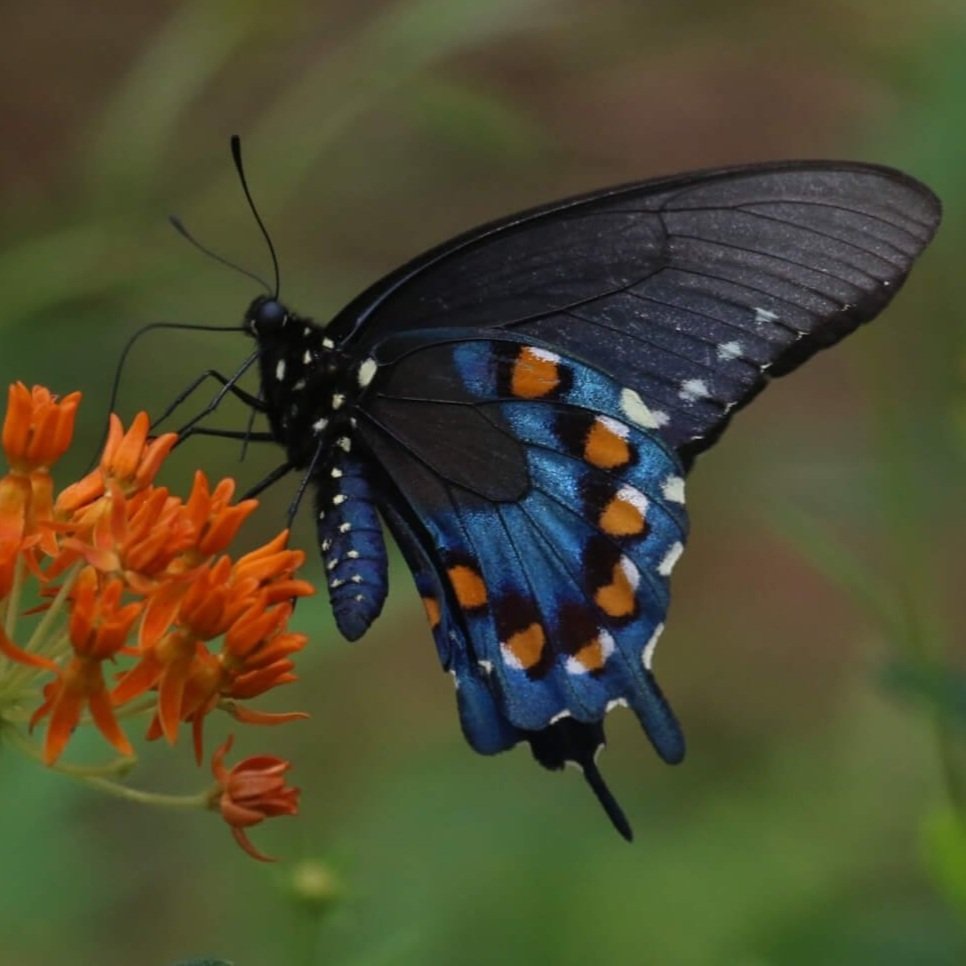
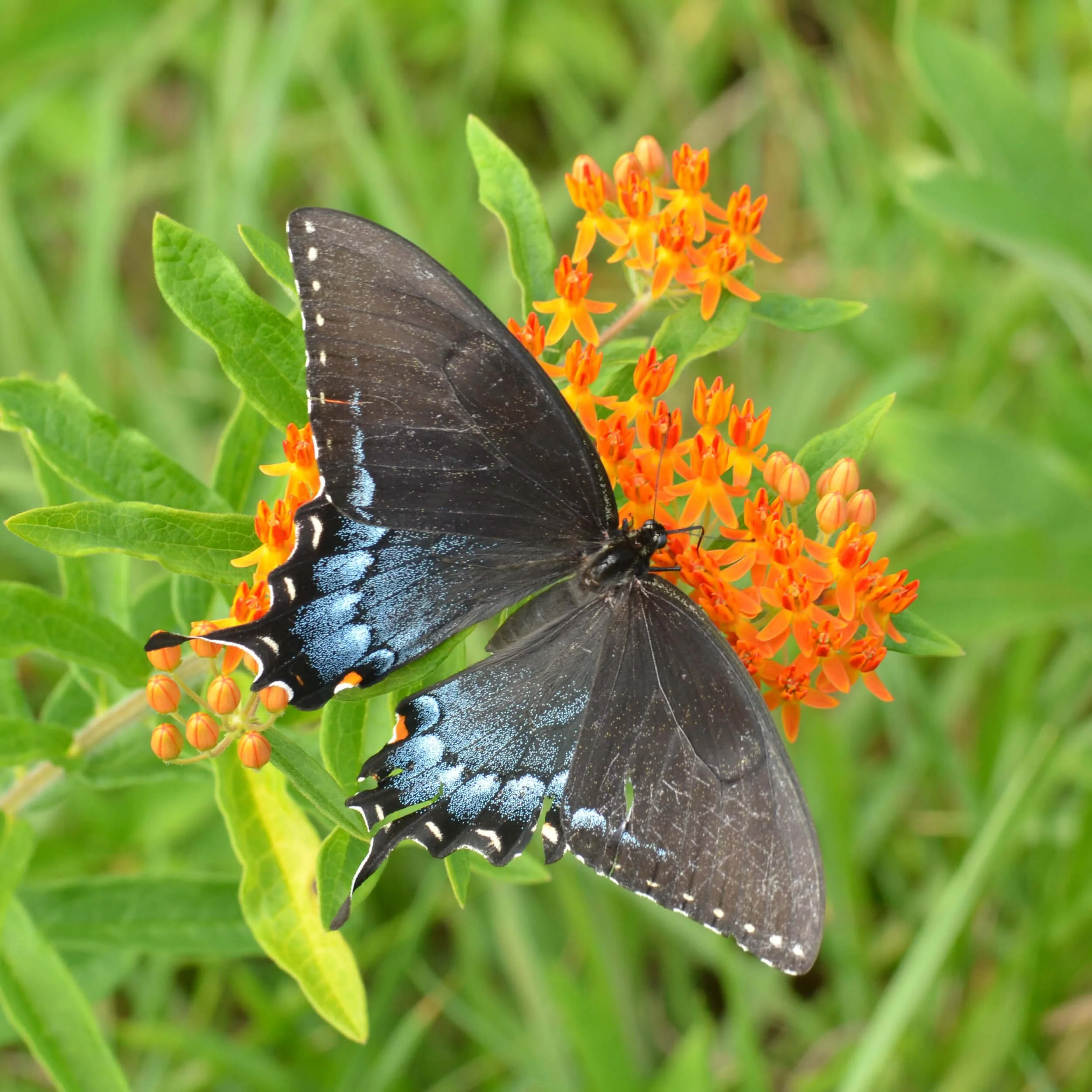
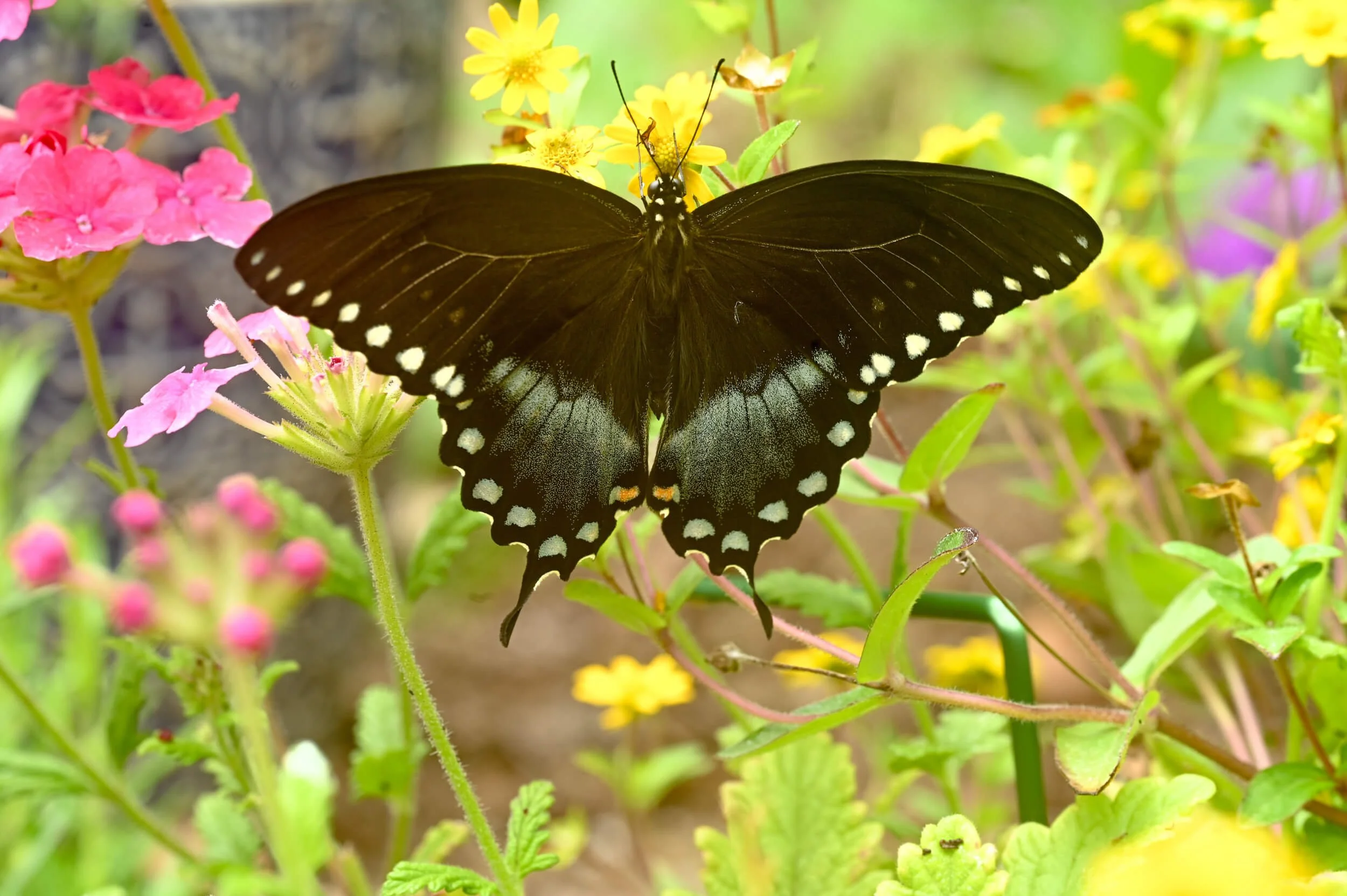
This is called Batesian mimicry. It may trick predators into thinking the Red-spotted Purple carries distasteful toxins from the pipevine plant like Pipevine swallowtails. The Red-spotted Purple’s “disguise” causes some birds to avoid it rather than eating what they assume to be poisonous, or at least disgusting.
Several swallowtail butterflies use this trick, including Black, Spicebush, and the dark form of the Eastern Tiger. But the Red-spotted Purple is the only one without tails!
Photos: Sharon Mammoser
Insect Poop Is Called Frass & This Caterpillar is Frass-inating!
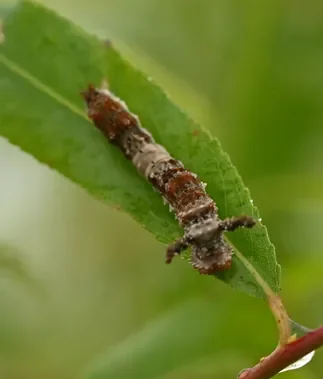
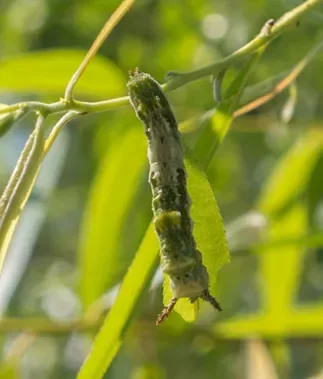
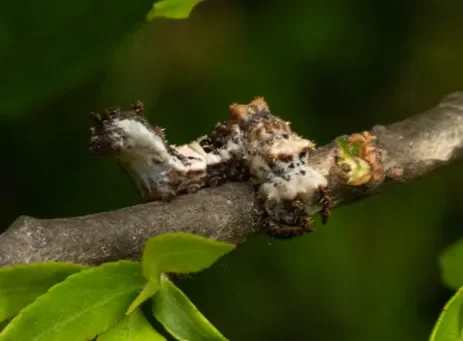
Sometimes brown, and sometimes greenish, mixed with white, the caterpillar mimics bird droppings at every growth stage (instar).
Photos: Sharon Mammoser
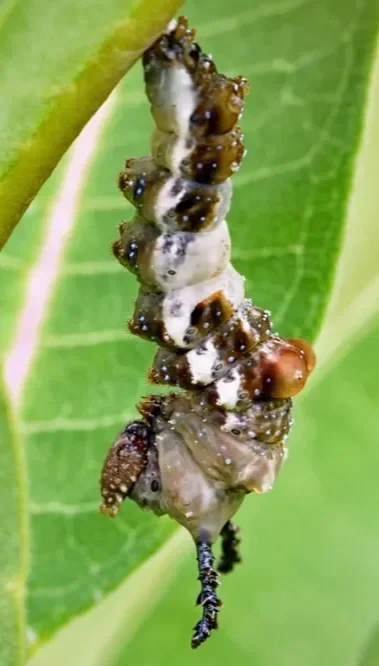
This dangling caterpillar is fully grown and preparing to transform into a chrysalis (pupate).
With that color and shape—plus what look like two undigested berries on its back and those sticks coming out of its head—what self-respecting bird would eat it?
Photo: Sharon Mammoser
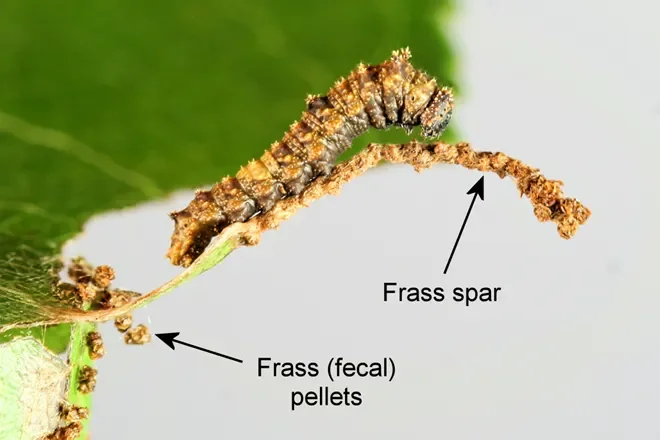
Caterpillars are tasty protein packets for lots of animals, especially birds. Many caterpillars hide from them on the underside of, or rolled up inside, a leaf. Not the Red-spotted Purple! Once it's eaten a leaf down to the midrib, it may coat its body in frass, dangle a chain of frass pellets, or lounge in plain sight on the frass dock it constructed.
Intrigued? Learn more at https://edis.ifas.ufl.edu/publication/IN814
Photo: Donald W. Hall, University of Florida
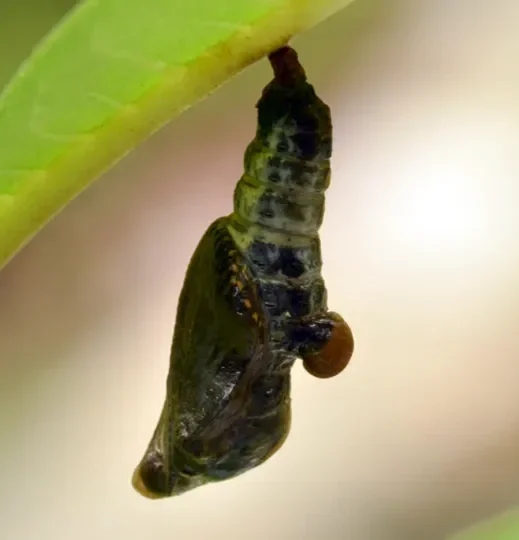
Even the Chrysalis Looks Like Poop!
Can you see the red spots on the developing wing edge?
Photo: Sharon Mammoser
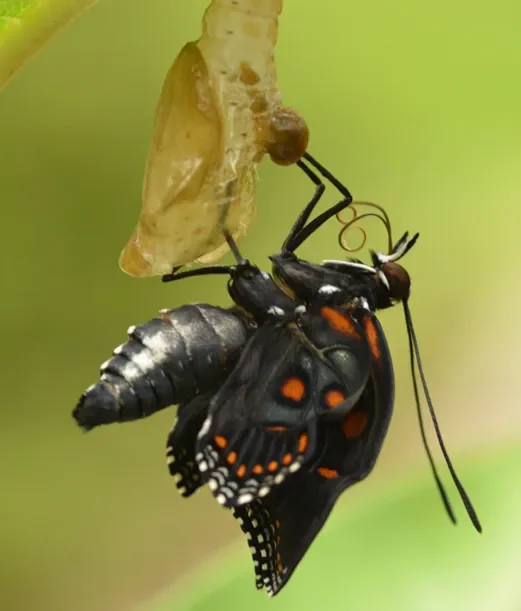
This Red-spotted Purple has just emerged from its chrysalis. Now it can zip the two sides of its proboscis (“tongue”) together and fill its wings with the hemolymph (insect “blood”) temporarily stored in its oversized abdomen. Once its wings are fully expanded and dry, it can fly.
Photo: Sharon Mammoser
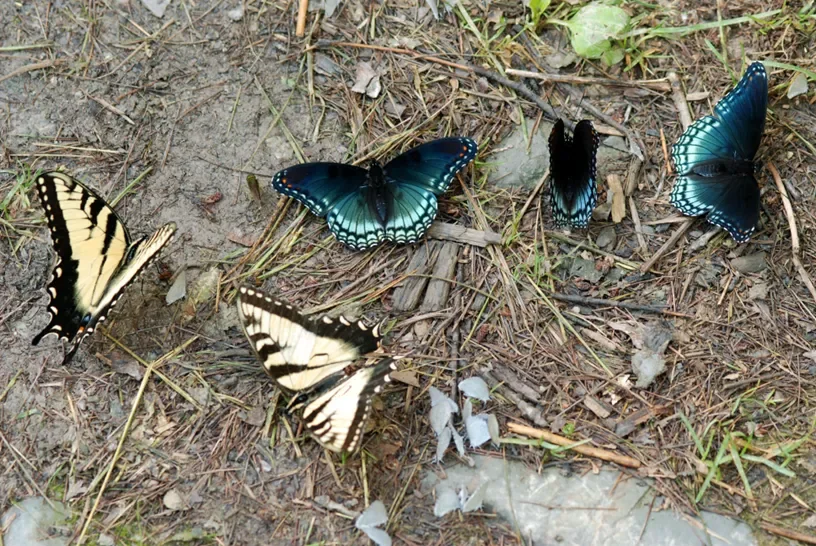
Let’s Puddle!
Male butterflies need the salt and other minerals in wet soil to transfer to the females during mating.
Photo: Sharon Mammoser
Which Came First, the Butterfly or the Egg?
Red-spotted Purple eggs are laid singly on or near the top of its host plant’s leaf tip. The eggshell is their first meal. The caterpillars eat their way out of these lacy miniature Epcot-like spheres when they’re ready to hatch.
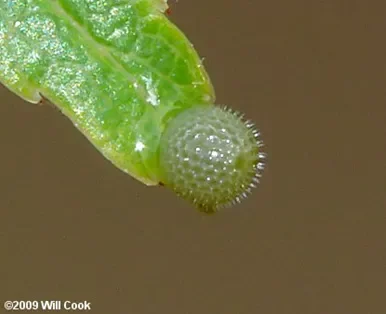
“A freshly laid egg on the tip of a Black Cherry (Prunus serotina) leaf. I watched the butterfly land on several leaves and deposit an egg on each, always carefully placing it at the very tip.” Wake Co., NC 5/3/09”.
Photo: © 2009 Will Cook

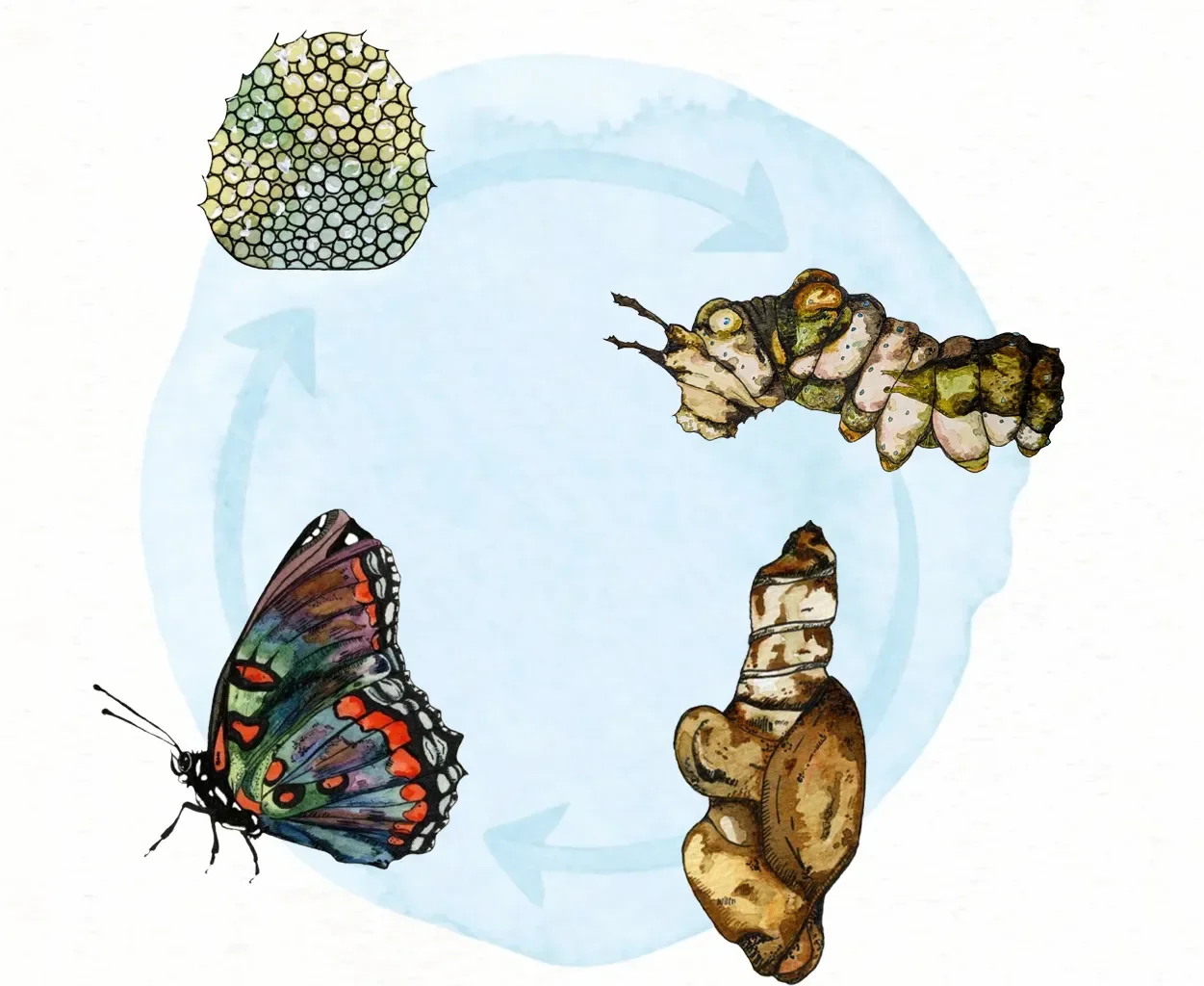
Red-spotted Purple Life Cycle
Egg: 7 days
Adult: 6-14 days
Caterpillar: 2 weeks
unless they overwinter in hibernaculum
Chrysalis: 10-14 days
Illustration: Lauren Gingery
Special Winter Survival Technique
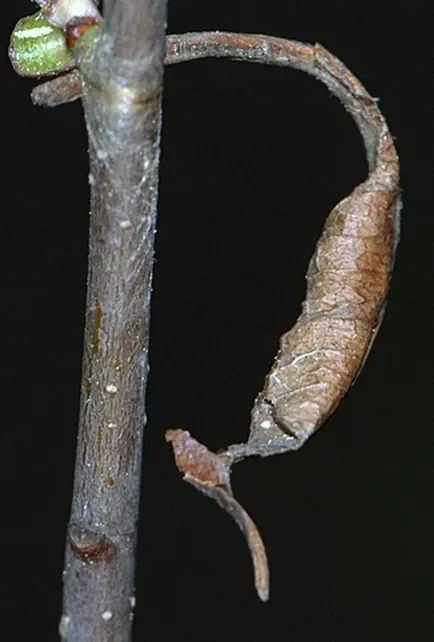
“Uh oh! It’s getting cold and I’m still a caterpillar! What do I do? No problem! To survive winter, a young Red-spotted Purple caterpillar like me can wrap itself in a leaf held together with my own silk! This is our hibernaculum, like you humans’ sleeping bag.” (Notice how hibernaculum starts just like “hibernate?”)
Mimicry is everywhere in nature. Adult Viceroy butterflies look completely different from Red-spotted Purple adults, but their caterpillars are practically identical and have the same superpower for overwintering.
Photo: Scott Hartley
Caterpillar Host Plants
Red-spotted Purples tend to live in forests and wooded suburban areas. That may be why the adult generally prefers tree sap, rotting fruit and scat to flower nectar.
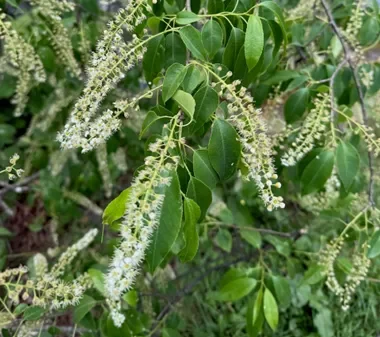
In Western North Carolina, Red-spotted Purple caterpillars feed on the leaves of a variety of native deciduous trees and shrubs, including wild black cherry, serviceberries and willows.
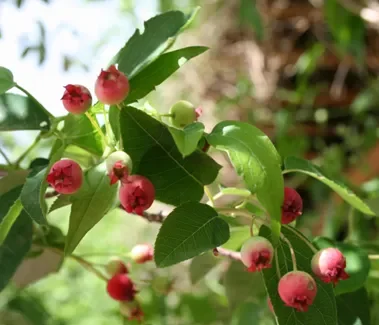
Serviceberry (Amelanchier laevis)
Photo: Vanessa Richins Myers, About.com, Bugwood.org
Black Cherry (Prunus serotina)
Photo: Phyllis Stiles
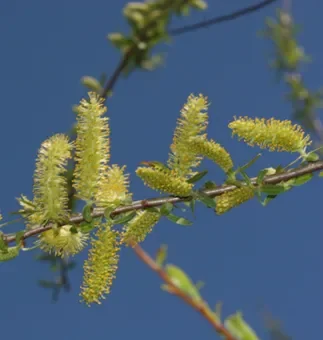
Black Willow (Salix nigra)
Photo: Jeffrey S. Pippen, www.jeffpippen.com
How You Can Help
Red-spotted Purple’s are not threatened, but you can still help reverse decline by taking action:
Plant their host plants in your yard to attract their caterpillars.
Include flowers in your garden for nectaring adults.
Remove exotic invasive plants that displace native species.
Avoid pesticide use.
Learn more about Pollinator Gardening Principles and create a certified pollinator habitat in your yard.
Consider adopting a butterfly survey route with the Carolinas Butterfly Monitoring Program.
Photos: @Sara Bright/Alabama Butterfly Atlas and Pete Dixon
Thanks!
Many people and organizations made this Butterfly Trail possible. See the full list. For the Red-spotted Purple, we’d like to give a special thanks to:
The Town of Weaverville for hosting the station
Dr. Matt Bertone, Department of Entomology and Plant Pathology, NC State University for taking photos of their butterfly specimens for the freestanding wings
Gabriel Slater for webpage design
Jill Jacobs at Spriggly’s Beescaping for interpretive sign design
Lauren Gingery for the life cycle illustration
Cathy Davenport for extensive research
Nina Veteto, Blue Ridge Botanic, for coloring page design
And the incredible photographers credited above, including:
Sharon Mammoser, NatureForMySoul.com
Pete Dixon
Jeffrey S. Pippen, www.jeffpippen.com
Susan Elliott
Vanessa Richins Myers, About.com, Bugwood.org
Scott Hartley
Donald W. Hall, University of Florida
Will Cook
Phyllis Stiles