Caterpillar Hunting Season Is Officially Open!
Photo: Phyllis Stiles
By Phyllis Stiles, Founder and Director Emerita of Bee City USA
We are not suggesting you kill butterfly and moth caterpillars, but it is fun to hunt for them! Most of them are really good at hiding, so just like any skilled hunter, you have to know when and where to look, and what to look for.
I have been checking my flowering dogwood ever since it started budding out in hopes of finding a spring azure butterfly caterpillar because spring azure moms lay their eggs on the buds, and the caterpillars feed on the flowers. The caterpillars even appear different colors (green, yellow-green, creamy white or pinkish red) depending on the flower’s developmental stage. Summer azures have 2-4 generations and are active spring, summer and fall, but spring azures have just one generation and it’s only in the spring. No luck finding spring or summer azures? Check your Black Cohosh flowers for Appalachian Azure caterpillars. It’s their only host plant.

Pipevine Swallowtails Seem to Be Everywhere in WNC Now!
Pipevine swallowtail butterfly caterpillars, on the other hand, are not so well campuflaged. The butterflies seem to be everywhere now and they want to reproduce.
Click on this video to see these gorgeous male pipevine swallowtails “puddling” to consume minerals to pass on to females during mating. Video: Phyllis Stiles
Before You Go Hunting, Know The Host Plant
If I found a caterpillar in a flowering dogwood flower, I would know it was the spring, rather than the summer azure, because the summer azure does not use the flowering dogwood as a host plant.
But the pipevine swallowtail’s ONLY host plant around here is Dutchman’s pipevine. That makes it much easier to find their caterpillars. Add to that, both their eggs and young caterpillars are orangey-red and clustered together. Add to that, the moms generally prefer laying their eggs on the vine tendrils rather than the leaves, and the leaves are just now coming out, which makes those eggs easier to spot on the vine.
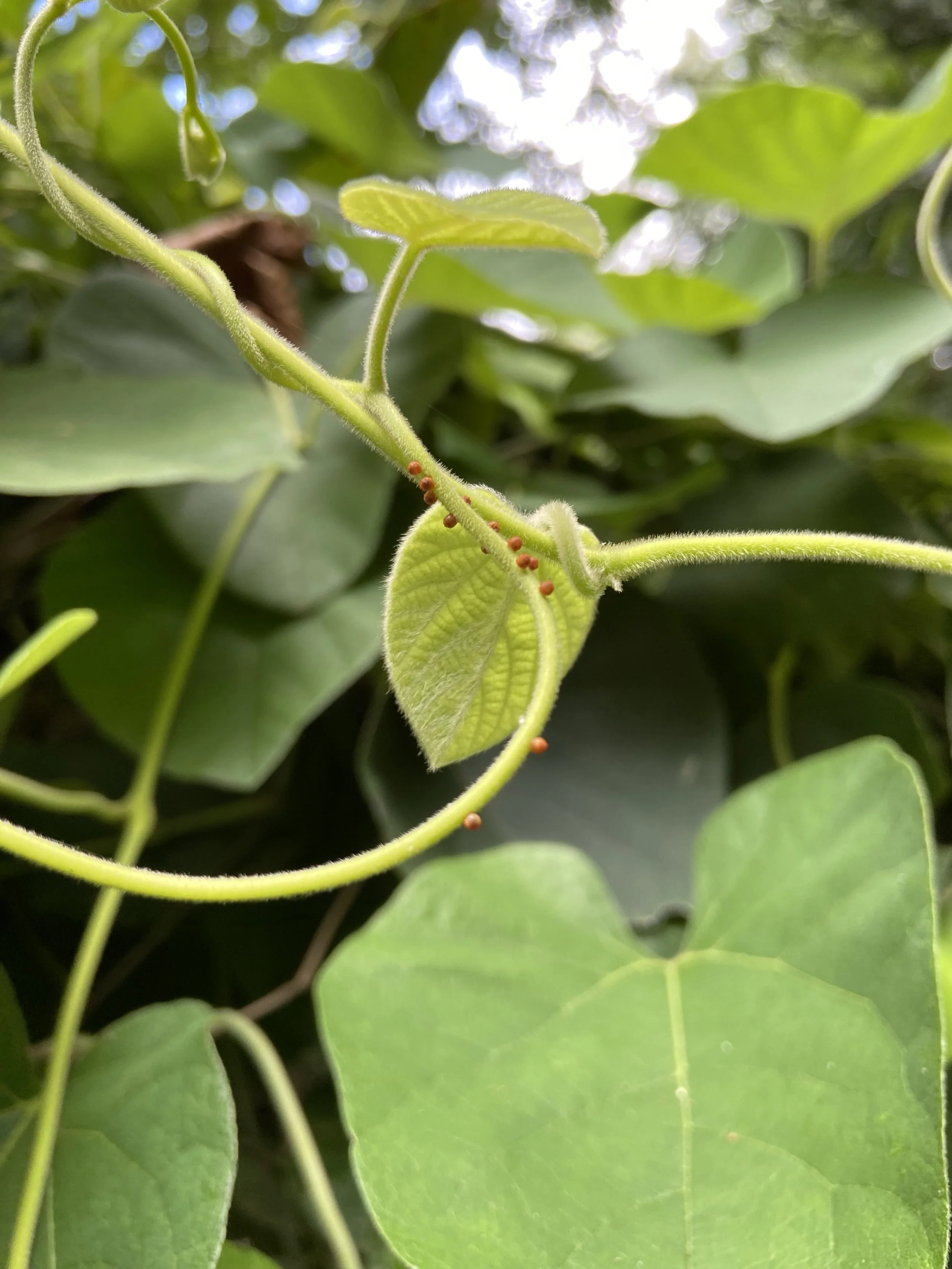
Photo: Phyllis Stiles
Follow the Frass
Insect poop is called “frass.” Caterpillars eat constantly and produce little black balls of frass. If you see lots of frass, look above it for caterpillars.
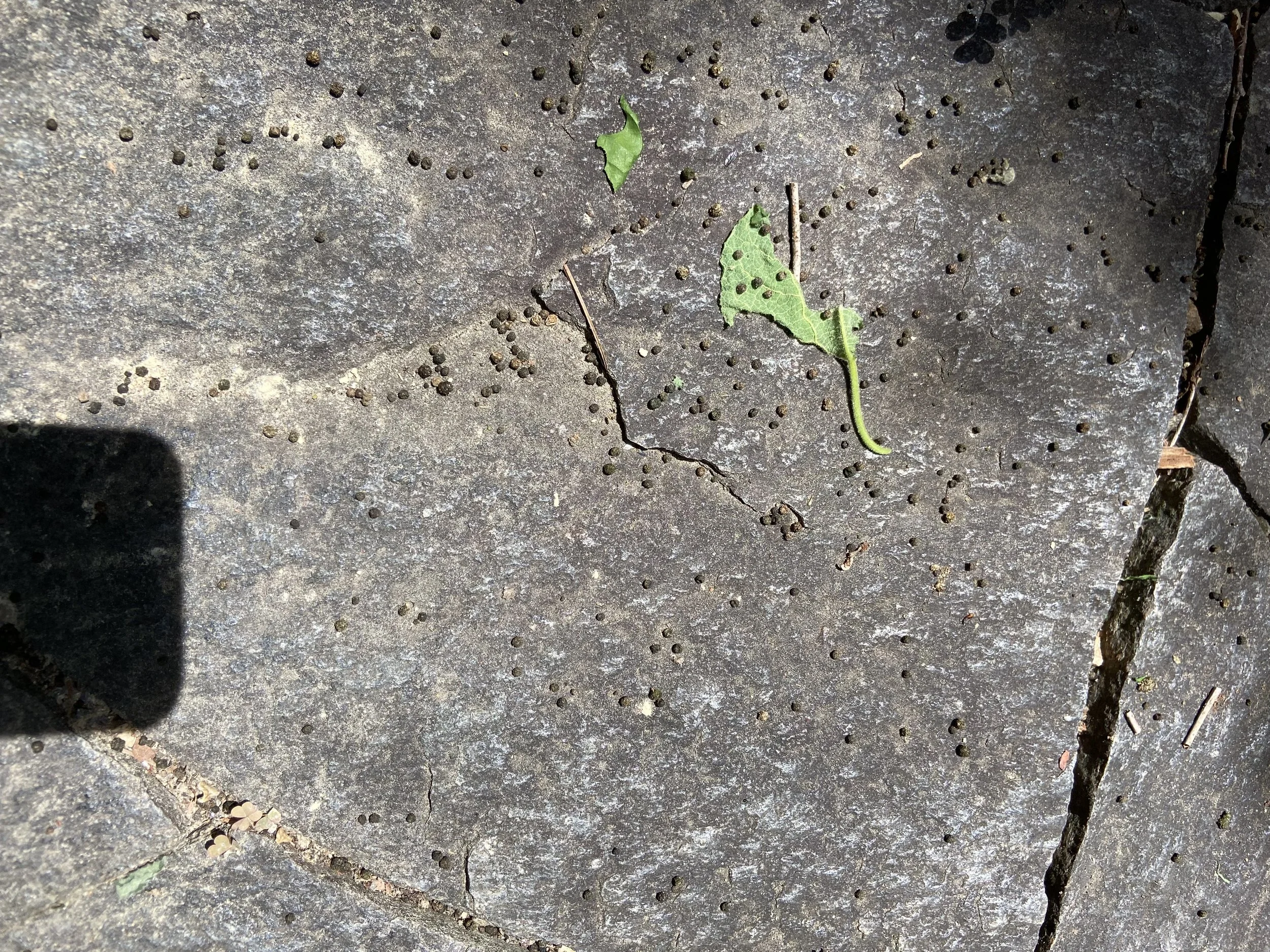
Photo: Phyllis Stiles
Go Online to See What the Caterpillars Look Like
Pipevine swallowtails’ young caterpillars are orangey-red like the eggs, but as they grow and shed their skin, they turn black with small red spikes.
If you listen closely to this video, you can hear the caterpillars munching. Video: Phyllis Stiles
Not All Caterpillars Feed During Daylight Hours
Some caterpillars hide during the day by burrowing in the ground like zebra swallowtails, or wrapping up taco-style in a leaf like spicebush swallowtails. Check their host plant for leaf damage during the day. If something has been eating the leaves, use a flashlight with a red light at night to search their host plant. If you’re really lucky, and you know how the caterpillar looks, you may find them feeding.
Monarchs Returning from Mexico Will Soon Lay Eggs in Western North Carolina
Check Journey North to see when the first eggs and caterpillars are reported in WNC. In spring, monarchs generally lay a single creamy white egg on young milkweed plants on the underside of the leaf.

Photo: Phyllis Stiles
Those eggs hatch into black/white/yellow striped caterpillars. Young caterpillars often notch the leaf’s midrib to drain the latex that would otherwise glue their mouths shut. If the midrib has been notched, inspect the milkweed carefully and you will probably find a monarch caterpillar there.
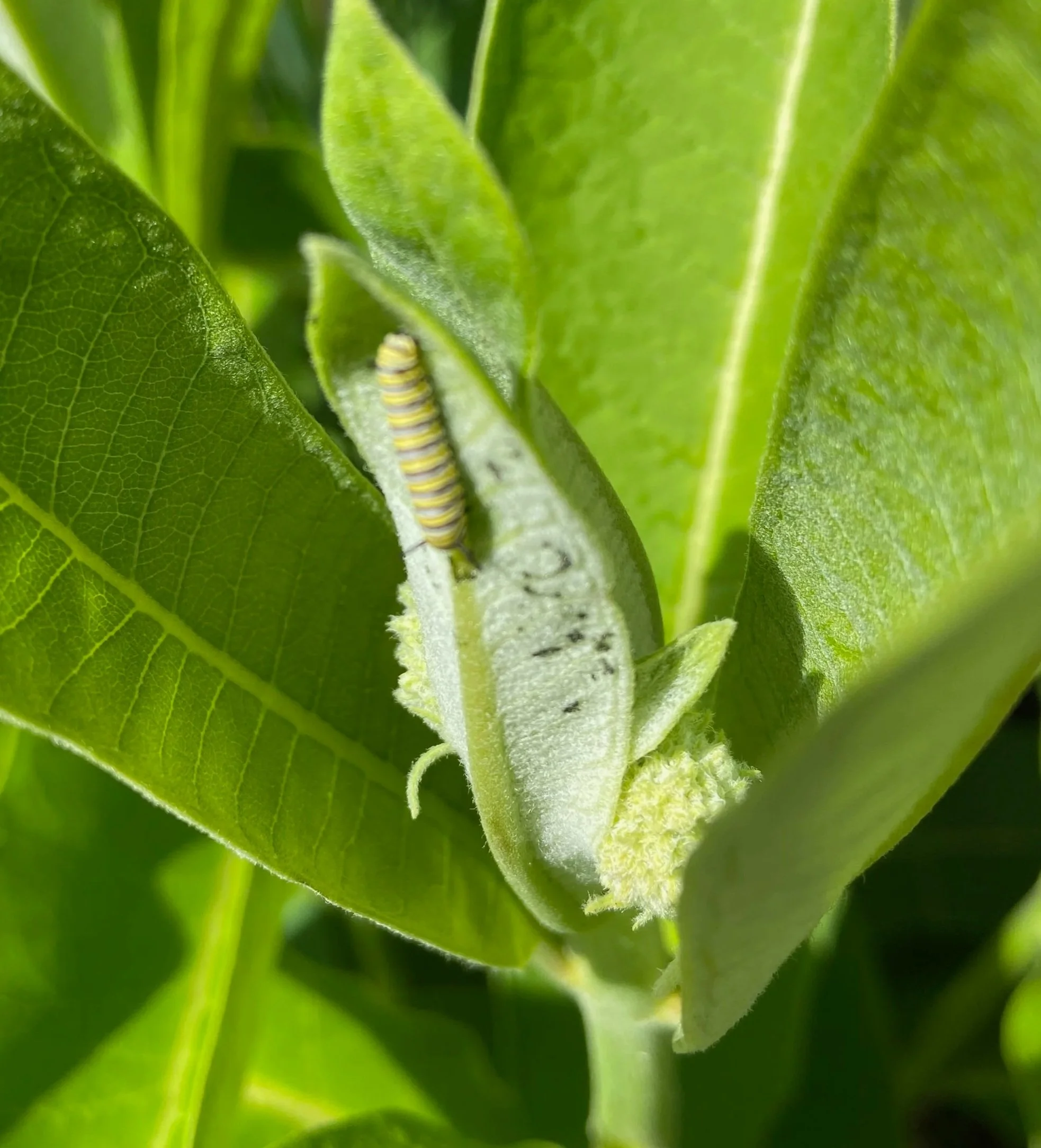
As the caterpillar grows, the black stripes become more pronounced. Photo: Phyllis Stiles
Learn more about the fascinating lives of butterflies and their caterpillars on the Asheville Butterfly Trail. And download our Bee City USA-Asheville Recommended Species List for Western North Carolina to identify caterpillar host plants.
Happy hunting!